Running the Distance with Destiny Green
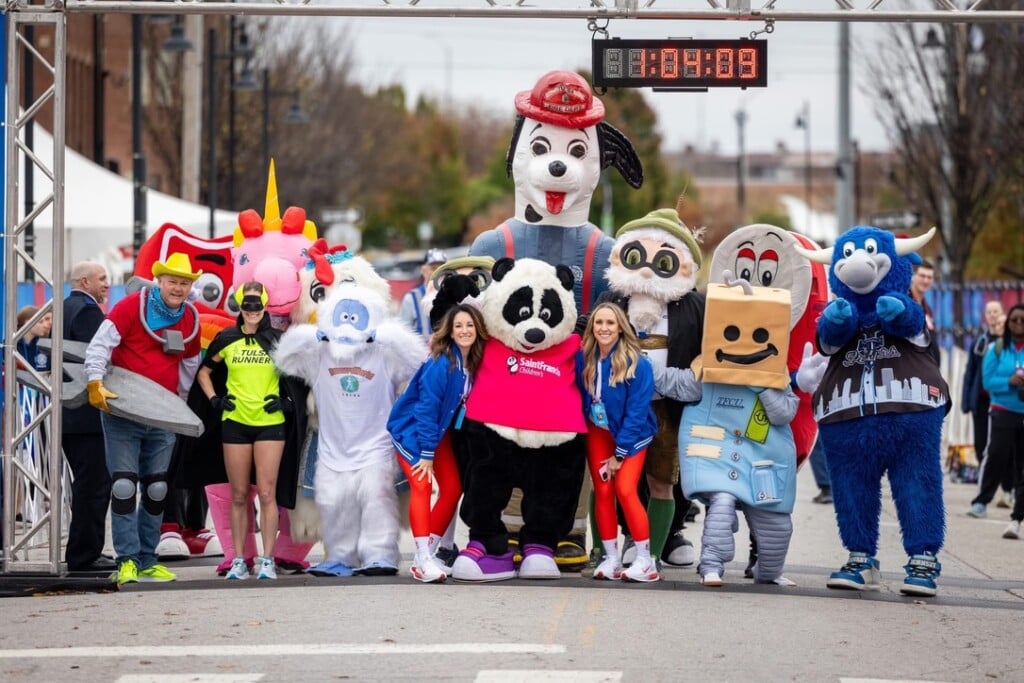
For nearly half a century, the Tulsa Run has brought generations of families into the streets to move, cheer and make memories. The Williams Route 66 Marathon has created its own traditions while drawing participants from across the country. The woman behind both of these iconic events is Destiny Green, executive director of the Tulsa Run and the Williams Route 66 Marathon.
During this visit, Destiny shares why families should not be intimidated by getting involved in race events, how children are developing confidence through the Kicks for Kids program and why simply showing up can make an unforgettable difference.

Destiny Green with sons Wyatt and Grayson. Photo by Meghan Garrett
TK: The Tulsa Run and the Williams Route 66 Marathon have become meaningful Tulsa traditions. What makes these events so special?
Destiny: The Tulsa Run is very historic. It is truly what brought running to Tulsa, and we are now in our 49th year. There is so much history there. Families participate together, and many have done it year after year. People want to come out and make those memories as a family, while new participants join us every year. It is spectacular, and I love being part of it. This is also the centennial year for Route 66, and we recently celebrated the marathon’s 20th anniversary. The centennial has been wonderful for the event and Tulsa as a whole.
TK: Some parents may hear Tulsa Run or Route 66 Marathon and think the events are only for serious runners. How can families participate without feeling intimidated?
Destiny: We truly have something for everyone. You can do a one-mile walk or walk a 5K. You can even walk a half marathon or marathon as long as you remain within the time limits. The important thing is that there are attainable ways for people of many ages and abilities to participate. It is not only a marathon or only a 15K.
TK: I understand that you work on these events all year. What other ways might people and families get involved?
Destiny: Volunteering. These events could not happen without Tulsa’s amazing volunteers. It takes at least 1,000 volunteers to produce the marathon, and our ideal number is closer to 1,200. While some directors work throughout the year, we also offer four-hour volunteer opportunities. If your child needs service hours for school or an activity, we can find a place for them. We also have opportunities for retired adults and people with a variety of abilities. Our volunteers are known across the country for being warm and welcoming, which reflects who we are as Oklahomans.
TK: What advice would you give a parent or child who is starting from the couch and wondering whether even one mile is possible?
Destiny: Just get up and go for a walk after dinner. Call your friend and talk while you walk around the neighborhood. Begin with anything that gets you moving. You may be surprised by how many friends you find through exercise. You can also join one of Tulsa’s free run clubs or a run-walk or structured training program. There is something for everyone. Get out there, have fun and let the experience be what it is for you.
TK: Kicks for Kids is an especially meaningful part of your work. How did the program begin?
Destiny: We started Kicks for Kids in 2019. The race had always had a charitable component, and we had supported the United Way and its area agencies. We love those organizations, but we wanted to create something more closely connected to our mission. I thought, “What better way to give back than to create more runners and share that love of running?” Running was a huge outlet for me as a child, a place where I could simply be myself. It can be a great equalizer because a child does not need expensive equipment or a certain team to begin. When you consider the impact on children’s mental health, confidence and well-being, it made sense to build a program around those benefits.

Destiny with one of the children from the Kicks for Kids program. Photo by Meghan Garrett
TK: What do children experience through Kicks for Kids?
Destiny: We partner with local Title I elementary schools to provide coaching and mentoring, generally for third through fifth graders and sometimes sixth graders. We teach children about nutrition, confidence and life lessons while helping them become active. At the end of the program, each participating child receives an entry into the Williams Route 66 Marathon 5K, including the race shirt, bib and medal. The children also earn a brand-new pair of running shoes by attending at least 70% of practices
We wanted the shoes to represent something they worked toward. They can say, “I showed up, I did the work and I earned these shoes.” Some children have never owned a brand-new pair of shoes. If a child arrives without properly fitting shoes, we quietly provide some so they can safely begin, and then they earn their new pair alongside everyone else.
The program began in four schools and has grown to 18. We have also watched siblings come through and have gotten to know families over the years. Seeing that growth has been incredible.
TK: Beyond fitness and shoes, what do you believe children receive from the program?
Destiny: Many children are coming from homes where they may not have consistent stability. I want them to know that every Tuesday or Thursday, they will see Coach Destiny. I will give them a hug or a high five and tell them I am proud of them. That consistency is an important part of Kicks for Kids. School staff tell us how meaningful the program is and how strongly they want to keep it. We give children tools for an active life, dependable relationships and the experience of setting a goal and reaching it.
TK: Do volunteers need to be experienced runners to coach Kicks for Kids?
Destiny: Not at all. People sometimes think they need to be amazing runners, but the most important qualification is a willingness to show up consistently. Volunteers can walk with the children, encourage them and talk about how movement, nutrition and confidence work together. Some days, a child may seem discouraged. Simply asking about their morning and offering encouragement can go a long way. Those children will not forget the adults who showed up for them.
TK: You talk often about community. Why do you believe community is so important in running and in life?
Destiny: Community is huge. Life throws curveballs, and the people you train with see you when you are tired and wondering whether you can go one more mile or even 50 more yards. They are there to push you, but they do not support you only through your running journey. These people become friends and often become your biggest support system. I experienced that after losing my partner in 2023. The world did not stop asking things of me, and I had to keep moving through an incredibly hard season. My team and my circle showed up for me. I am deeply thankful for this community.
Register and Connect
There is still time to register for the Tulsa Run and Route 66 Marathon. Families can learn more about race distances, registration and volunteer opportunities at tulsarun.com and through the Williams Route 66 Marathon’s social media channels and route66marathon.com. Green also shares an inside look at training, running and event planning on Instagram through Girls Behind the Bib.
Listen to the Sharing Passion and Purpose podcast on your favorite podcast platform to discover Destiny’s favorite race distance, her personal theme song and the meaningful story behind it.
 Nancy A. Moore is an adjunct professor at Tulsa Community College and has been a writer for TulsaKids for more than 20 years. Her podcast, Sharing Passion and Purpose, can be found on most podcasting platforms or on NancyMoore.co.