A Stronger Foundation for Pelvic Health
A little leak when you sneeze. An unexpected urge to use the bathroom. Waking up several times during the night to go.
For many women, these experiences are familiar, particularly after childbirth or as they get older. Yet bladder control problems aren’t always easy to talk about, even with a doctor.
That may be changing as conversations about pelvic health become more common and women learn more about the treatment options available to them. While Emsella, a noninvasive treatment designed to strengthen pelvic floor muscles, is often offered as a self-pay service, Nerve Renewal Neuropathy Clinic is one of the few clinic groups in the state that accepts most insurance plans for the treatment. Coverage and out-of-pocket costs vary by plan.
“With bladder control and incontinence, oftentimes people are like, ‘That’s not me,’ because there is that stigma associated with it,” says Jimmy Steele, co-owner of Nerve Renewal Neuropathy Clinic, which operates 12 locations across Oklahoma.
But incontinence isn’t limited to severe bladder control problems. Even occasional leakage while laughing, coughing, exercising or jumping on a trampoline can be a sign of a pelvic floor problem.
And while these symptoms are common, women don’t necessarily have to accept them as an inevitable part of motherhood or aging.
Understanding the Pelvic Floor
The pelvic floor is a group of muscles and connective tissues that supports the bladder, bowel and reproductive organs. These muscles also play an important role in bladder control, core stability and everyday movement.
Pregnancy, childbirth, aging and hormonal changes can affect pelvic floor function. When the muscles become weakened or aren’t working properly, women may experience urinary leakage or other symptoms. Pelvic floor exercises can help strengthen these muscles. However, some women have difficulty identifying and contracting the correct muscles, making it challenging to exercise them effectively.
A Different Approach to Strengthening Muscles
Nerve Renewal recently introduced Emsella, a noninvasive treatment that uses electromagnetic energy to stimulate pelvic floor muscle contractions.
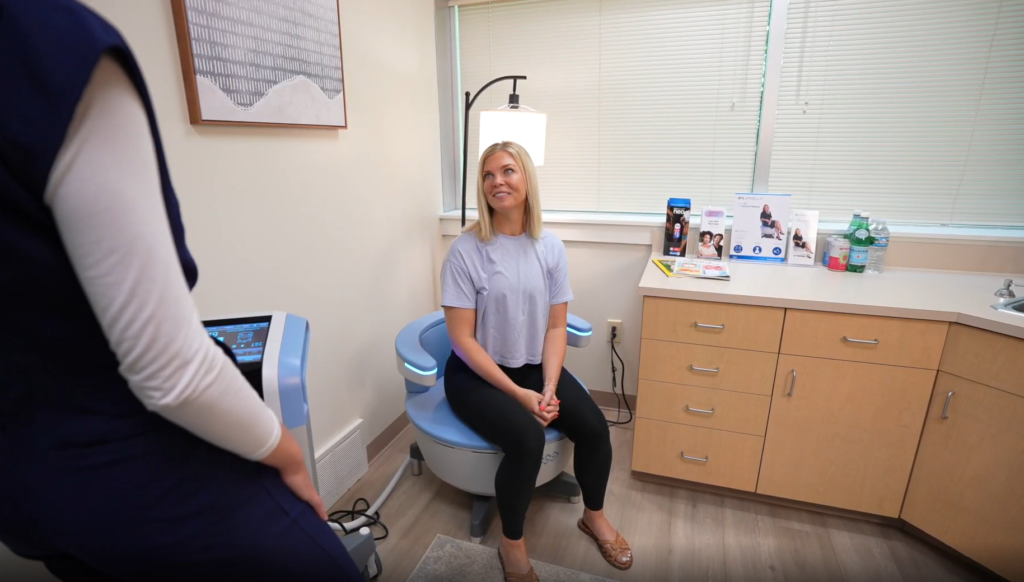
Patients sit fully clothed in a specially designed chair while the device delivers electromagnetic pulses to the pelvic floor muscles. The contractions are intended to help strengthen those muscles and improve bladder control.
According to Steele, a treatment session lasts approximately 28 minutes, during which the device can produce thousands of muscle contractions. Treatment plans typically include six, eight or 10 sessions, depending on the patient’s symptoms and the recommendation of a Nerve Renewal provider.
The treatment requires no surgery or recovery time, and patients can typically return to their normal activities immediately afterward.
Although research suggests electromagnetic pelvic floor stimulation may improve urinary incontinence symptoms for some patients, results vary, and the treatment isn’t appropriate for everyone. A medical evaluation can help determine the underlying cause of symptoms and the most suitable treatment.
Making Treatment More Accessible
For Nerve Renewal, introducing Emsella was a natural extension of its existing services.
The company began treating patients with neuropathy and nerve pain approximately five years ago in the Oklahoma City area and has since expanded to 12 locations throughout the state, including clinics in the Tulsa area.
Steele says the clinics have focused on offering nonsurgical, nonmedication treatment options, particularly for patients who might otherwise have limited access to specialized care.
One obstacle to Emsella treatment can be cost. The therapy has traditionally been offered at many practices as a self-pay service, potentially putting it out of reach for some patients.
“For a long time, the cost of Emsella meant that it wasn’t an option for everyone,” Steele says.
Nerve Renewal says it accepts most insurance plans for Emsella treatment, although coverage and out-of-pocket costs depend on the patient’s individual plan and benefits.
Prospective patients can contact the company’s centralized new patient team to ask questions, verify their insurance benefits and determine any applicable copay or out-of-pocket costs before beginning treatment.
The clinics began introducing Emsella in recent months, and Steele says the company hopes to continue expanding access throughout Oklahoma, particularly in communities where patients may have to travel considerable distances for specialized healthcare.
For women who have quietly adjusted their routines around bathroom breaks, avoided certain activities or simply accepted occasional leakage, the growing conversation about pelvic health is an encouraging development.
And perhaps the most important message is that bladder control concerns are worth discussing with a healthcare professional. Common doesn’t have to mean untreatable.
Learn More
For information about Emsella treatment, insurance verification or Nerve Renewal clinic locations, visit nerverenewalnow.com. A healthcare professional can help determine whether the treatment is appropriate for your symptoms.
Pelvic Floor Health: What Women Should Know
Your pelvic floor muscles do more than help control your bladder. They support several organs and contribute to everyday functions, from exercise to bowel control.
Three common signs of pelvic floor dysfunction:
- Urinary leakage: Losing small amounts of urine when coughing, laughing, sneezing or exercising.
- Sudden urgency: Feeling a strong, unexpected need to urinate, sometimes accompanied by leakage.
- Frequent bathroom trips: Needing to urinate more often than usual, including waking repeatedly at night.
When to talk to your doctor: If bladder symptoms interfere with your daily activities, sleep or quality of life, bring them up with your healthcare provider. You don’t have to wait until symptoms become severe to ask for help.
Nerve Renewal Neuropathy Clinic is a paid partner of TulsaKids & Family.