How to Help a Child Afraid of the Doctor
Key Takeaways: 5 Ways to Make Doctor Visits Easier
- Prepare them. Explain in simple, age-appropriate terms what will happen.
- Be honest. Don’t promise a shot or test won’t hurt if it might.
- Stay close. Hold a hand, offer a lap or sit beside your child.
- Stay calm. Kids often take emotional cues from their parents.
- Use distraction. A favorite toy, game, song or small reward can give your child something else to focus on.
Learning to navigate doctor’s offices is a rite of passage for parents. You’ve gone from lugging an infant car seat in one hand and a diaper bag in the other to convincing your toddler to choose just one toy to bring inside while chasing them through the parking lot.
But doctor visits can be stressful for kids of all ages. Even older children and teens may feel anxious about what will happen once they get inside—and parents may wonder what they can do to make the experience easier.
Tulsa pediatrician Dr. Erin Grimes says some fear is completely normal. The good news? Preparation, honesty and a calm parent can make a difference.

Dr. Erin Grimes
It’s Normal for Kids to Fear the Unknown
Grimes has spent 17 years working in pediatric urgent care settings, where many of her patients are visiting a new facility for the first time. Going somewhere unfamiliar can be stressful for kids—and their parents—especially when they aren’t sure what will happen there.
Children’s fears can also change with age. Babies and toddlers may be especially wary of unfamiliar people, while school-age children may become anxious about specific procedures, such as strep tests or shots.
Strong fears can cause kids of all ages to resist—sometimes a little and sometimes more than a little.
Fear isn’t a behavioral problem. Parents may feel embarrassed when a child cries, resists or has a difficult time at the doctor’s office, but Grimes encourages parents to remember that children may be reacting because they feel vulnerable or don’t know what to expect.
Helping them understand what will happen is one way parents can make the experience easier for their child, themselves and the doctor.
Helping Kids Know What to Expect
Explaining what to expect beforehand is one of the simplest ways to help an office visit go more smoothly. Even young children can benefit from knowing what is likely to happen.
If it’s a routine visit, for example, let your child know ahead of time if vaccines are likely. Be honest that a shot may hurt for a moment, but reassure them that it will be over quickly.
Reassurance can be physical, too. Hold your child’s hand, sit beside them on the exam table or let a baby or toddler sit in your lap when possible.
A parent’s calm presence, combined with age-appropriate information about what to expect, can make a world of difference.
Before You Go: Be Honest and Specific
Depending on the visit, let your child know the doctor or nurse may:
- Check their height and weight.
- Listen to their heart and lungs.
- Look in their ears, nose and throat.
- Use medical equipment that may look or sound unfamiliar but shouldn’t hurt.
- Perform a test, such as a throat or nasal swab, to help determine what’s making them sick.
- Give a vaccine at a routine visit. Be honest that it may hurt for a moment, but it will be over quickly.
Don’t promise that something won’t hurt if it might. Honest, age-appropriate information helps children know what to expect and builds trust.
Trusting Your Child’s Doctor
Developing a relationship with a doctor that you—and your child—can trust can also make a positive difference.
“The big thing to tell children is that the doctor is there to help them,” Grimes says.
That doesn’t mean telling children everything will be painless. Grimes says honesty is important, and she won’t tell a child something won’t hurt when it might.
“Some things might be uncomfortable or hurt, but it is for a very short period, and it is to help us figure out the best way to treat them,” she says.
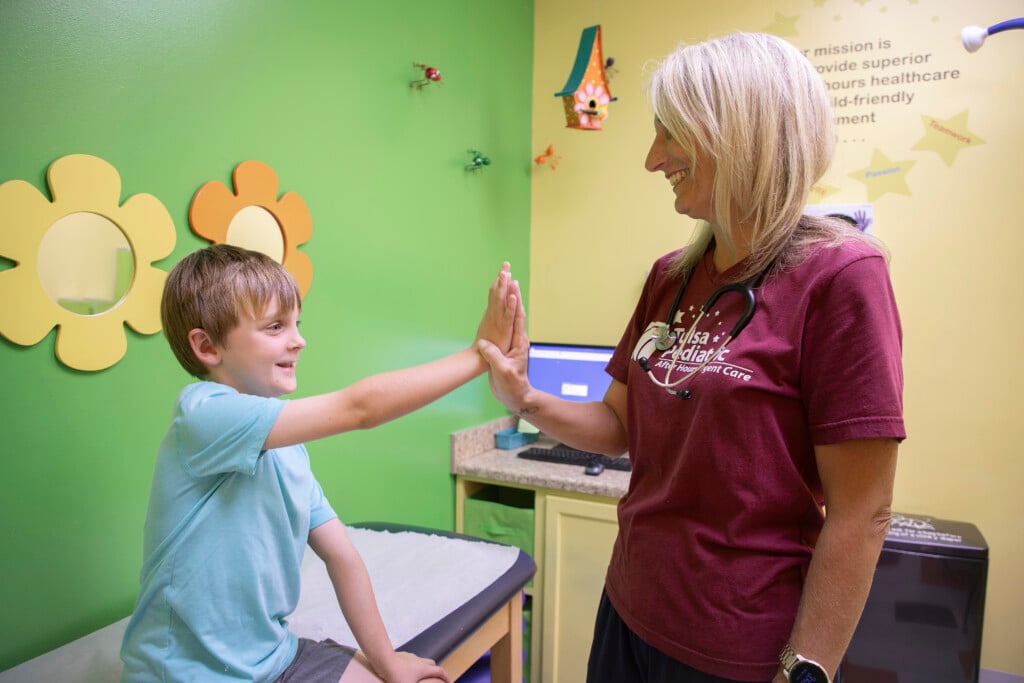
Distraction can help, too. At Tulsa Pediatric Urgent Care, colorful exam rooms, toys and playful accessories worn by staff help redirect children’s attention, while popsicles, stickers and other small rewards can give them something positive to focus on after a difficult procedure.
“Some kids walk in the door and are like, ‘This is the popsicle place!’” Grimes says.
When Anxiety Takes Over
Of course, when a child begins to spiral, parents can start feeling stressed, too. Remind yourself that your child’s fear is normal, take a breath and try to stay calm. Children often look to their parents for cues about how to react.
Sometimes, continuing to talk about an upcoming procedure can actually prolong the anxiety. Once a child knows what to expect and has been reassured, Grimes says it may be better to calmly proceed rather than continuing to negotiate or build anticipation.
“As someone who experiences anxiety, I know the buildup can be much worse than the actual event,” Grimes says. “Sometimes, the best approach is simply to take a deep breath and get it done.”
When parents and doctors develop a trusting relationship, acknowledge normal fears and work together, doctor visits can feel less stressful for everyone.
“We’re not afraid to get on the floor with a scared child, make a nervous kid laugh or joke around with an annoyed teenager,” Grimes says. “We love caring for kids of all ages, and we truly believe they are the best population to work with in health care.”
 Jen Buckner is a writer living in Tulsa with her three kids, three cats and husband. She loves to volunteer, go on adventures with her family and find creative ways to make the world a kinder and more beautiful place.