Why Sharing Is Hard for Young Children
Understanding what’s developmentally normal can help parents teach sharing with patience and practice.
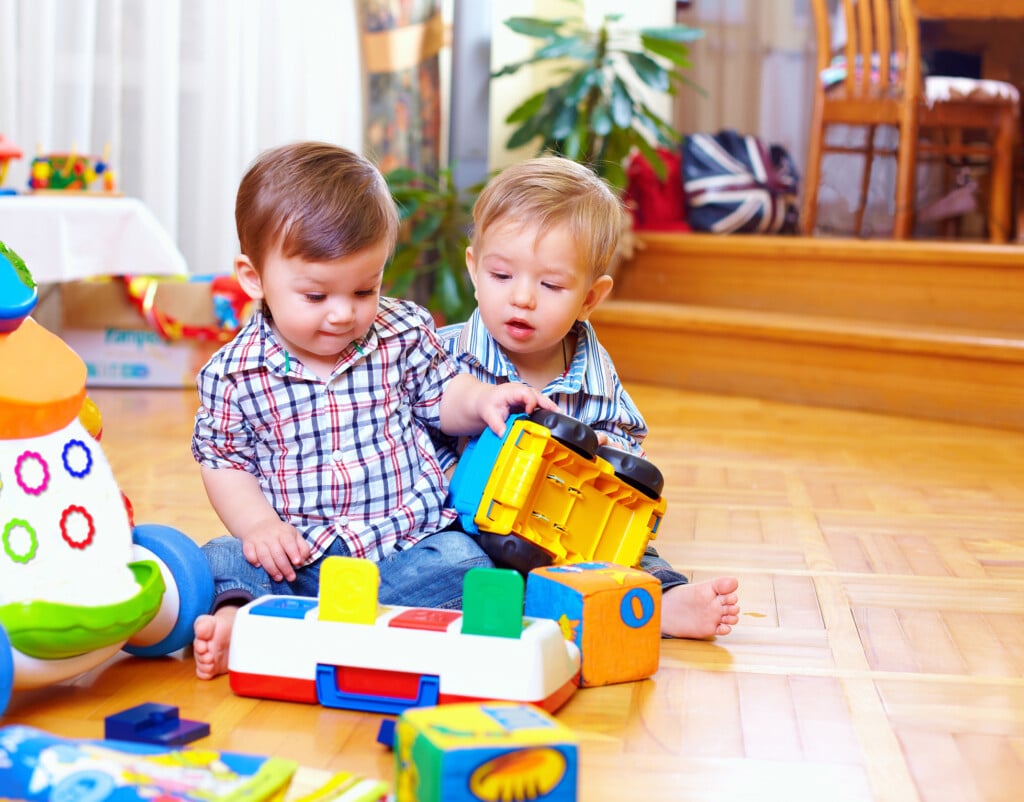
Sharing can be a difficult skill for young children to learn. Understanding what sharing is, why we share and the feelings of appreciation and gratitude that come from sharing often develop more fully between ages 7 to 10, although children can begin learning these concepts much earlier.
Appreciation and gratitude are higher-level social and emotional skills. Young children are still learning about emotions, feelings and behavior. They are naturally egocentric, which is developmentally appropriate and part of a built-in survival instinct. Because of this, expecting young children to consistently share can be unrealistic. They are not yet developmentally wired to understand sharing the way adults do. Rather than punishing children for struggling to share, guide and support them as they learn.
Helping Children Learn to Share
Sharing can be taught over time through modeling, practice and conversation. Reading books about sharing, singing songs and incorporating sharing into imaginative play with dolls or toys can help children understand the concept. Role-playing situations where characters share, say “please” and “thank you,” and take turns can reinforce these skills. Like learning to ride a bike, sharing takes practice and does not happen overnight.
Children also need help understanding that saying “please” does not automatically mean their request will be granted. Disappointment and even meltdowns may occur. When this happens, respond calmly and matter-of-factly: “She said no because she is playing with it right now. You can have a turn later.” Then move on.
Taking turns can also be practiced using a timer. Let children know they have a few more minutes with an item, set the timer and explain that when it goes off, it will be the other child’s turn. Showing them the timer and letting them hear the alarm beforehand can help them understand what to expect. Some children may still resist or protest. Reassure them, restate the expectation and respond calmly.
You can also tell children ahead of time that you are going to “practice sharing.” Demonstrate how it works, talk about the experience afterward and discuss feelings: “That made her happy when you shared with her.”
Not Everything Has to Be Shared
Children should not be expected to share their comfort items or “loveys.” Not everything needs to be shared. If a child has a special blanket or other self-soothing item, requiring them to share it can create genuine distress, anxiety and confusion about personal boundaries.
To encourage sharing, create opportunities to give to others together. Make artwork, cards or cookies and share them with friends, family or neighbors. Talk about why you are sharing and how it feels. Age-appropriate volunteer activities and charitable projects can also help children develop empathy and generosity. Most importantly, adults should model kindness, sharing and generosity in everyday life.
Sharing really is hard for young children. When adults understand what’s developmentally appropriate, they can set realistic expectations and patiently support children as they build important social and emotional skills.
 Angela Percival-Porter is a child development specialist for the State of Oklahoma. She is an adjunct professor, former director of an NAEYC-accredited early learning center, and a consultant to childcare centers.