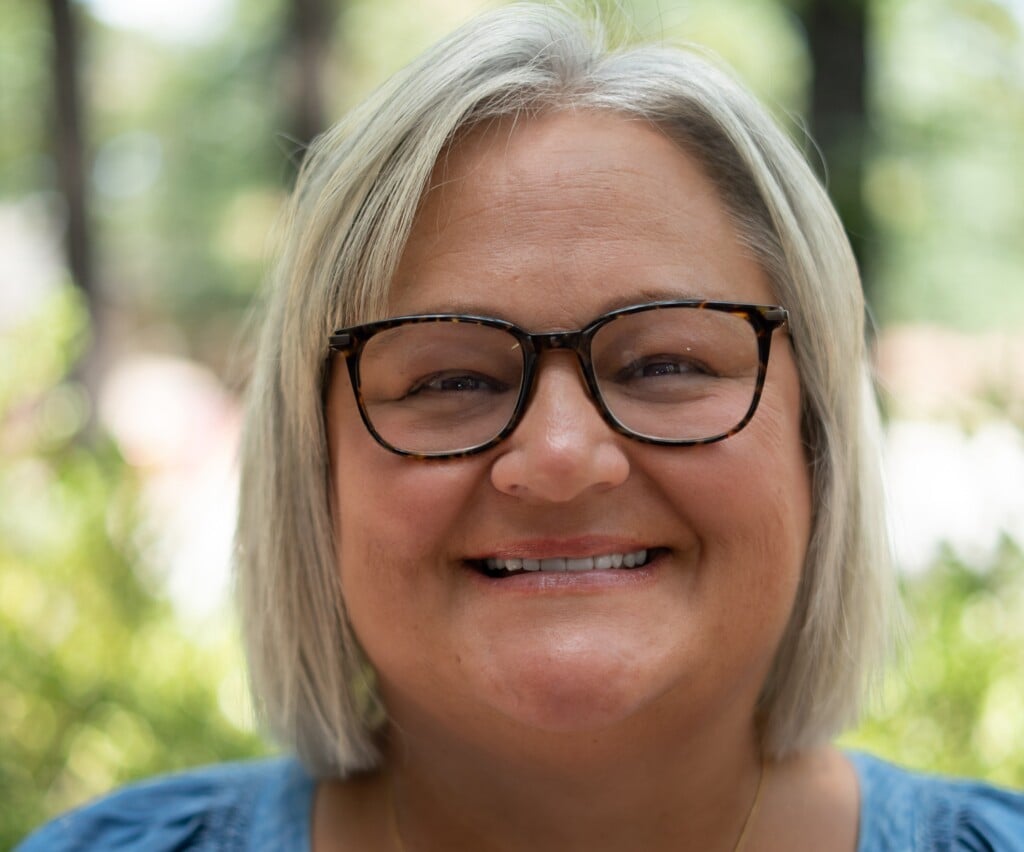
Impactful Women of the 918: Toni Moore
President and CEO, Hospitality House of Tulsa


Toni Moore knows first-hand the difficulties families face when forced to seek medical care outside of their hometown, having walked this path with both her mother and husband. Moore also spent 15 years working in healthcare administration, becoming familiar with the healthcare system and its challenges. But it wasn’t until she began an in-depth study of biblical hospitality in the early 2000s that all these experiences coalesced into a clear vision.
“I discovered that the biblical definition of hospitality extends far beyond entertaining friends or opening our homes to guests,” says Moore. “Scripture describes hospitality as showing brotherly love to strangers and caring for those who are vulnerable.”
As a result of this study, “God placed a vision on my heart” that came to fruition in 2006, when the first Hospitality House of Tulsa opened. This first house was followed by a second, as well as the Lodgingly program, and to date, Hospitality House of Tulsa has served more than 11,000 families.
Hospitality remains a key part of Moore’s life, both professionally and personally, and she encourages others to embrace it as well. “Hospitality isn’t limited to opening your home. It’s opening your heart,” she says. “It’s creating space in your schedule, your relationships and your resources for someone who needs hope.”
Q&A with Toni Moore
Please provide a little background on what you do. When did you found Hospitality House of Tulsa, and what led to that decision?
When I was 17 years old, my mother was diagnosed with an advanced form of breast cancer. Her diagnosis required my parents to travel for medical treatment, leaving our small rural community and driving hours—sometimes across state lines—to access the specialized care she needed. Years later, just six weeks after my husband and I were married, he was seriously injured in an accident and hospitalized hours from home. Once again, I experienced firsthand the emotional, logistical, and financial burdens that accompany a medical crisis away from home.
I spent 15 years working in healthcare administration, where I gained an understanding of the healthcare system and the challenges patients and families face beyond the walls of a hospital.
Then, in 2003, at the prompting of a dear friend, I began an in-depth study of biblical hospitality. I discovered that the biblical definition of hospitality extends far beyond entertaining friends or opening our homes to guests. Scripture describes hospitality as showing brotherly love to strangers and caring for those who are vulnerable. As my personal experiences, healthcare career, and study of Scripture came together, God placed a vision on my heart to create a hospitality house where patients and their family caregivers traveling to Tulsa for medical care could find not only a place to stay, but also compassion, community, and hope.
Through the incredible support of the Tulsa community and partners across Oklahoma, that vision became a reality. We opened our first Hospitality House in August 2006, expanded with a second home in 2011, and launched our Lodgingly program in 2023 to serve even more families needing affordable medical lodging.
Today, more than 11,000 families from all 77 Oklahoma counties, 48 states, and 13 countries have found a place of refuge through Hospitality House and Lodgingly during one of the most difficult seasons of their lives. Looking back, I see God’s faithfulness woven through every step of the journey. What began as a personal understanding of medical hardship became a calling to practice biblical hospitality in a way that has transformed thousands of lives.
What services does Hospitality House offer, and how does that make an impact in our community? In your role as founder and CEO, how specifically would you say that you impact the community?
Hospitality House of Tulsa exists to remove one of the greatest barriers to healthcare—access. Medical crisis is evenly distributed, but access to medical care is not. Every day, families from across Oklahoma and surrounding states must leave their homes to receive specialized medical treatment. When they arrive in Tulsa, they often face an impossible choice: pay for a hotel or pay for the treatment, medication, rent, car payment, gas or groceries they need.
Hospitality House of Tulsa provides a place where those families can stay at little or no cost while their loved one receives medical care. Beyond lodging, we provide meals, transportation assistance, prayer support, encouragement and a compassionate community that reminds families they are not walking through their crisis alone. Through our Lodgingly program, we have expanded that mission by partnering with hotels to provide affordable lodging options when our Hospitality House is full or when families need accommodations elsewhere.
The impact reaches far beyond a free place to sleep. When a family doesn’t have to worry about where they will stay or how they will afford another night in a hotel, they can focus on what matters most—being present with the person they love.
As founder and CEO, I don’t see my role as simply leading an organization. I see it as helping our community recognize needs that have been hidden in plain sight and then inviting people to become part of the solution. My greatest contribution has been creating a model of biblical hospitality and a solution to access that brings together hospitals, businesses, churches, volunteers, donors and community leaders around one shared purpose: ensuring that no family faces a medical crisis alone.
I often tell people that I didn’t start Hospitality House because I wanted to build a nonprofit. I started it because I watched my own mother battle cancer when I was a teenager, and I experienced how difficult it was for families who must travel for treatment. God took one of the hardest chapters of my life and transformed it into a ministry that has now served thousands of families.
If I hope to have made any lasting impact on our community, it is this: that we have changed the way people think about hospitality. Hospitality isn’t simply entertaining guests or setting a beautiful table. Biblical hospitality is making room in our lives, our hearts, and our communities for strangers who are hurting. When we do that, we don’t just change someone’s day—we can change the trajectory of an entire family’s journey through crisis.
How do you define hospitality, and what about it is so important – both as a concept generally, and specifically when it comes to Hospitality House?
For many people, hospitality means entertaining friends, preparing a beautiful meal or making guests feel comfortable in your home. Those are wonderful expressions of hospitality, but I believe biblical hospitality goes much deeper.
Romans 12:13 says, “Share with God’s people in need. Practice hospitality.” The original Greek word used here for hospitality is philoxenia, which mean showing brotherly love to strangers. The verse also reminds us that hospitality is a practice, not perfection. It’s compassion expressed in practical ways. It looks like a volunteer preparing a meal, a donor providing a night’s lodging, a housekeeper making sure a room is spotless for the next family, or someone sitting quietly with a guest and praying when words aren’t enough.
That understanding became the foundation for Hospitality House of Tulsa.
When families arrive here because of cancer, a premature birth, organ transplant, or another serious illness, they are often exhausted emotionally, physically, spiritually and financially. They don’t simply need a room; they need hope. They need someone to tell them they’re not alone.
I believe our communities need more hospitality today than ever before. We live in a culture that often feels divided and isolated, but hospitality builds bridges. It reminds us that every person has a story, every family carries burdens we cannot see and small acts of kindness can have eternal significance.
Hospitality House is simply one place where we get to practice that every single day.
What other activities, volunteer work, etc. do you do, and why is that important to you?
I enjoy spending time with my grandchildren and godchildren. While we have the blessing of seeing them often, one of our favorite things to do is plan our annual Obi & Poppy Summer Camp where they spend three days and nights with us. We have wonderful experiences and fun all around Green Country.
I currently serve on the Advocacy Committee for the Healthcare Hospitality Network, a national organization that connects hospitality homes serving patients and families across the country. I’ve also had the privilege of leading national research on the impact healthcare hospitality has on families, helping our field better understand not only the financial burden of medical travel but also the emotional, physical and spiritual challenges families experience. I believe that when we can combine compassion with credible research, we become stronger advocates for the people we serve.
Closer to home, I enjoy serving my own community through neighborhood leadership and by speaking to churches, civic organizations, businesses and healthcare groups about biblical hospitality, and caring for families facing medical crisis. Every opportunity to share our story is also an opportunity to invite others to discover that they, too, can make a meaningful difference.
What ties all of these activities together is my love for community and caring for others. At the end of the day, I don’t measure significance by titles or accomplishments. I measure it by whether I’ve been faithful to the work God has entrusted to me and whether that work has helped someone else find hope.
What strengths do you see in Tulsa, and what area(s) do you think need to be improved?
One of Tulsa’s greatest strengths is its generosity. I’ve had the privilege of working alongside business leaders, healthcare professionals, churches, foundations, volunteers and everyday citizens who genuinely want to make our community better. There is a spirit of compassion here that is remarkable, and I’ve watched people from every walk of life come together to meet needs that no one organization could address alone.
Tulsa is also a city that embraces innovation. Throughout the years, I’ve seen our community invest in new ideas, support entrepreneurs and encourage nonprofits to think creatively about solving complex problems. Hospitality House exists today because people in Tulsa were willing to believe in an idea that had never existed here before.
At the same time, I think we have an opportunity to become even more intentional about caring for people who are experiencing hidden hardships. Medical travel is one of those challenges. Thousands of Oklahoma families must leave home every year to receive specialized healthcare, yet many people don’t realize the financial, emotional, and spiritual burdens that accompany that journey. As our region continues to grow as a healthcare destination, we also have a responsibility—to ensure that access to healthcare includes access to affordable lodging, transportation, meals and compassionate support for families. There’s a famous line from the movie Field of Dreams: “If you build it, they will come.” But when they come for critical medical care, where will these families sleep and eat affordably?
More broadly, I hope we continue breaking down the silos that sometimes exist between nonprofits, businesses, healthcare systems, government and faith communities. The biggest challenges facing our city are too complex for any one sector to solve alone. I’ve learned that when organizations stop asking, “How can we do more?” and instead ask, “How can we do this together?” extraordinary things begin to happen.
What gives me hope is that Tulsa has already demonstrated this collaborative spirit. I’ve seen competitors become partners, churches work alongside hospitals, businesses invest in ministries, and neighbors care for strangers. Those are the qualities that make a city truly significant.
If I had one hope for Tulsa’s future, it would be that we continue to grow not only in opportunity and prosperity, but also in compassion. Because at the end of the day, the strength of a city isn’t measured only by its skyline or its economy—it’s measured by how well it cares for the least of these.
What are some ways you would encourage others to make an impact on the city?
I would encourage people to stop asking, “What difference can one person make?” and start asking, “What need has God placed in front of me today?”
Hospitality House began because I noticed a need that wasn’t being met. I didn’t have all the resources, experience or answers. I simply believed that if God was calling me to serve families facing medical crisis, He would provide what was needed one step at a time. Looking back over more than 20 years, I’ve learned that God rarely asks us to accomplish the whole vision at once. He asks us to take the next faithful step.
Every person has gifts, experiences and relationships that can make our city stronger. You don’t have to start a nonprofit to make an impact. You can mentor a young person, deliver a meal, welcome a new neighbor, serve through your church, support a local nonprofit, encourage a caregiver or simply notice the person who feels invisible. Small acts of faithfulness, repeated over time, often become extraordinary stories.
I also believe we should be willing to collaborate beyond our own circles. Some of the greatest accomplishments I’ve witnessed happened because businesses, churches, nonprofits, healthcare systems and civic leaders chose to work together rather than independently. When we focus less on who receives the credit and more on serving our community, everyone benefits.
Finally, I would encourage people to embrace hospitality as a way of life. Hospitality isn’t limited to opening your home. It’s opening your heart. It’s creating space in your schedule, your relationships, and your resources for someone who needs hope. Every one of us has the opportunity to make another person’s burden a little lighter.
One lesson I’ve learned is that significance isn’t found in doing something famous; it’s found in faithfully doing what God has called you to do. When ordinary people consistently choose compassion, generosity, and hospitality, extraordinary things happen. That’s how communities are changed.
Do you have a fun fact that you can share about yourself, or do you have a favorite place to go in Tulsa?
One thing that surprises people is that I love ballroom dancing. Running a nonprofit that serves families facing medical crisis can be emotionally demanding, so dancing is one of the ways I recharge. It’s a wonderful reminder that joy is a gift from God and that even in the midst of life’s hardest seasons, there is still room to celebrate, laugh and enjoy the beauty of movement and music.
As for favorite places in Tulsa, I genuinely enjoy exploring our city’s local restaurants and coffee shops because I love seeing people gather around a table. Hospitality has become such a part of who I am that I’m always paying attention to how people welcome others. Whether it’s a neighborhood café or a fine dining restaurant, I notice the smiles, the conversations, the way guests are treated and the little details that make people feel like they belong.
I guess you could say I never really stop studying hospitality—it has become both my life’s work and one of my favorite hobbies.
Is there anything else you’d like to add?
I also hope people will remember that kindness is never wasted. A warm welcome, a listening ear, a home-cooked meal, a handwritten note or a place to stay during a medical crisis may seem like small gestures, but they can become life-changing moments for someone walking through their darkest season.