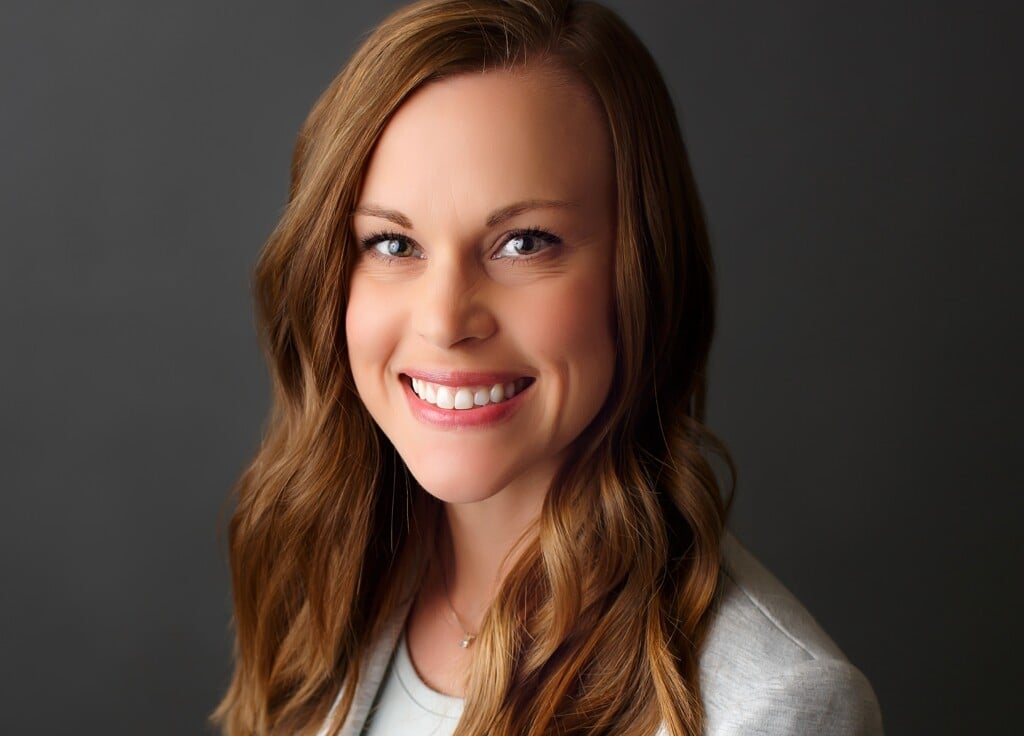
Impactful Women of the 918: Savannah Mendenhall
Legal Services Director and Guardian Ad Litem, Tulsa Lawyers for Children


When working in private law practice, says Savannah Mendenhall, “I realized pretty quickly that what fulfilled me wasn’t winning cases. It was helping kids.”
In 2024, Mendenhall was hired by Tulsa Lawyers for Children—a nonprofit dedicated to giving vulnerable children a voice in the legal system—as a senior staff attorney. She was promoted to her current position in 2025.
“I spend my days interviewing children, meeting with parents, teachers, counselors, doctors, DHS workers and anyone else who plays a role in a child’s life. Every recommendation I make has one goal: figuring out what’s truly in that child’s best interest,” she says.
Mendenhall’s priority is to make sure the child feels heard. She recounts a story of when a young girl begged not to see her father again. While others seemed to dismiss the girl’s concerns, Mendenhall recommended that any contact between the girl and her father be therapeutic and professionally supervised. Months later, the girl’s father was arrested for a violent crime. She still thinks about her.
“She was protected because her voice mattered,” says Mendenhall. “That’s what this work is about for me. Sometimes the biggest impact isn’t saying the right thing in court. It’s making sure a child knows that one adult believed them and was willing to fight for them.”
Q&A with Savannah Mendenhall
Please give us a little background on what you do – and what Tulsa Lawyers for Children does.
At Tulsa Lawyers for Children, our mission is to make sure children have a voice in the legal system when they’re going through some of the hardest moments of their lives. For 26 years, TLC has primarily focused on children in the foster care and deprived system.
In recent years, we’ve recognized that many of the challenges children face can be addressed earlier, before cases escalate into crisis. Because of that, we now also provide pro bono and low bono services in high-conflict divorce, paternity, guardianship and adoption cases, with the goal of supporting families and helping keep children safely out of foster care whenever possible. My job is to make sure that in every one of these settings, the best interest of the child stays at the center of every decision.
I started with TLC in 2024 as a Senior Staff Attorney and was promoted to Legal Services Director in 2025. Before that, I worked in private practice, but I realized pretty quickly that what fulfilled me wasn’t winning cases. It was helping kids.
Today I oversee our legal program while also carrying an entire caseload. I spend my days interviewing children, meeting with parents, teachers, counselors, doctors, DHS workers and anyone else who plays a role in a child’s life. Every recommendation I make has one goal: figuring out what’s truly in that child’s best interest. It’s challenging work, but I honestly can’t imagine doing anything else.
If you’d like to share a little about your personal life, please do.
Outside of work, my favorite title is “Mom.” My husband, Cole, and I have a little girl named Blakely who keeps us laughing every single day. Becoming a mom changed the way I see my work in a lot of ways. It has also deepened my understanding of grace and love in a way I didn’t fully grasp before, both the grace I give to others and the grace I’ve learned to receive. I love my husband and the life we are building together, and I am so grateful for the way he shows up for our family.
When I’m not working, you’ll usually find me spending time with my family, getting lost in a good book or at a Pure Barre class. It’s one of my favorite ways to reset and take care of myself. I also love planning our next adventure as a family, even if I have to do a little (or a lot) of convincing to get my husband on board.
You were nominated because others felt you have an impact on the community in some way. How do you feel that your posi4on impacts the community? Why is that important to you?
I think people sometimes underestimate how much childhood shapes everything that comes after it. The decisions made in family court don’t just affect today. They affect how a child feels about themselves, what relationships look like, whether they feel safe, and sometimes even who they become as adults.
I have the opportunity to step into a child’s life during an incredibly difficult season and make sure someone is listening…not to the loudest adult in the room, but to the child. If I can help one child feel safe, heard and protected, that impact doesn’t stop with them. It carries into their future, their family and eventually our entire community. That’s why this work matters so much to me.
Can you share a specific story or two about how your work has impacted a local child/family?
There is one little girl I’ll never forget. She was nine years old and absolutely terrified of her father. During one of our meetings, while we were playing CandyLand, she looked up at me with tears in her eyes and said, “Please… I don’t ever want to see my dad again.” As I investigated the case, I kept hearing the same thing from adults: “He’s just a little weird.” “He’s overprotective.” “He’d never hurt her.”
For a moment, I questioned whether I was reading too much into it. But every time I met with her, my gut told me something wasn’t right. Children don’t hyperventilate over visits or wake up screaming from nightmares for no reason. I ultimately recommended that any contact be therapeutic and professionally supervised. It wasn’t a popular recommendation, but the court agreed and put those protections in place. Months later, her father was arrested for a violent crime.
I still think about that little girl. Not because of what happened to her father, but because someone listened when she needed it most. She was protected because her voice mattered. That’s what this work is about for me. Sometimes the biggest impact isn’t saying the right thing in court. It’s making sure a child knows that one adult believed them and was willing to fight for them.
What other activities, volunteer work, etc. do you do, and why is that important to you?
I love being involved in organizations that are working to make Tulsa stronger. I am part of the OBA Leadership Class of 2026 and was recently added to the DVIS Associate Board, both of which have given me a deeper connection to the broader legal and advocacy community. I also volunteered in the daycare at my church, which was a meaningful way to stay grounded in service to children and families in a very hands-on way.
In my day-to-day work at the Family Safety Center, I try to be a consistent resource for the families we serve, whether that’s helping connect them to services or supporting efforts like food drives and other community needs.
I also spend a lot of time speaking with attorneys, judges and community partners about Guardian ad Litem work because I genuinely believe collaboration changes outcomes for kids. For me, community involvement isn’t something separate from my job. It’s an extension of it.
What strengths do you see in Tulsa, and what area(s) do you think need to be improved?
One of Tulsa’s greatest strengths is that we have people who care deeply about children and families. I don’t think our challenge is a lack of compassion. Every day, I work alongside judges, attorneys, therapists, teachers, nonprofit leaders and countless others who have dedicated their lives to helping children. Our challenge isn’t finding people who care. It’s making sure those people have the resources they need to step in early enough to make the biggest difference.
I think where Tulsa has the greatest opportunity for growth is in what I call the “middle space” of support. Every day, I see families who are trying to do the right thing but simply can’t access the services they need. Things like mental health evaluations, parenting classes, Guardian ad Litem services, custody evaluations and drug testing can be difficult to find or too expensive for many families. At the same time, they often don’t qualify for financial assistance because their children haven’t entered foster care. The reality is that much of the funding for these rehabilitative services becomes available only after a child has been removed from their home. By then, we’re responding to a crisis instead of preventing one.
I would love to see us invest more in that middle space, where families are asking for help before things reach that point. Earlier access to mental health care, parenting support, and family services can change the trajectory of a child’s life. If we can make those resources more accessible, I truly believe we’ll keep more families together, help more parents succeed, and most importantly, give more children the safe and stable childhood they deserve.
What are some ways you would encourage others to make an impact on the city?
People sometimes think they have to start a nonprofit or donate thousands of dollars to make a difference. Honestly, you don’t. I often think about what I call the three T’s of support: Time, Talent, and Treasure. Not everyone has the financial resources to give, but everyone has something to offer.
If you have time, mentor a child, volunteer, or simply show up for a family who needs support. If you have a talent, use it. Whether you’re a counselor, teacher, attorney, doctor, accountant or business owner, your professional skills can change someone’s life when you choose to share them. And if you have treasure, financial support is incredibly important. The need in our community continues to grow, and many nonprofits are filling gaps that government funding simply doesn’t cover. Every donation helps organizations continue serving children and families who need them most.
At the end of the day, making an impact isn’t about doing everything. It’s about doing something. When each of us offers what we already have, those small acts of generosity create stronger families, stronger nonprofits, and ultimately a stronger Tulsa.
Do you have a favorite place to go in Tulsa?
My favorite place in Tulsa is Utica Square. It has always felt like home to me. It reminds me of my grandmas, who have both passed away, and every time I’m there, I think of them. I love the flowers they plant in the spring, the Lights On ceremony on the night of Thanksgiving, the Santa and Nutcracker displays at Christmas, and Thursday nights in the summer for Summer’s Fifth Night concerts.
It’s one of those places that has been part of so many different seasons of my life. Now I get to experience it all over again with my husband and daughter. It feels like family. It feels like tradition. And it reminds me that some of the most meaningful moments in life are the simple ones.
Is there anything else you’d like to add?
I think the older I get, the more I realize that impact isn’t measured by titles or awards. It’s measured by people. It’s measured by whether someone’s life is better because you were part of it. I hope people leave this interview remembering one simple idea: Every child deserves at least one adult who is willing to fight for them.
I’ve been fortunate to build a career around being that person, but I also hope people realize you don’t have to be an attorney or work for a nonprofit to change a child’s life. Sometimes the greatest impact comes from simply showing up, listening and reminding a child that they matter. If that’s what people remember about. me, I’d consider that a life well lived.