New Book Tells Ruth Muskrat Bronson’s Story
Sisters Jen Loren and Rebecca Lee Kunz introduce young readers to the Cherokee activist and educator.
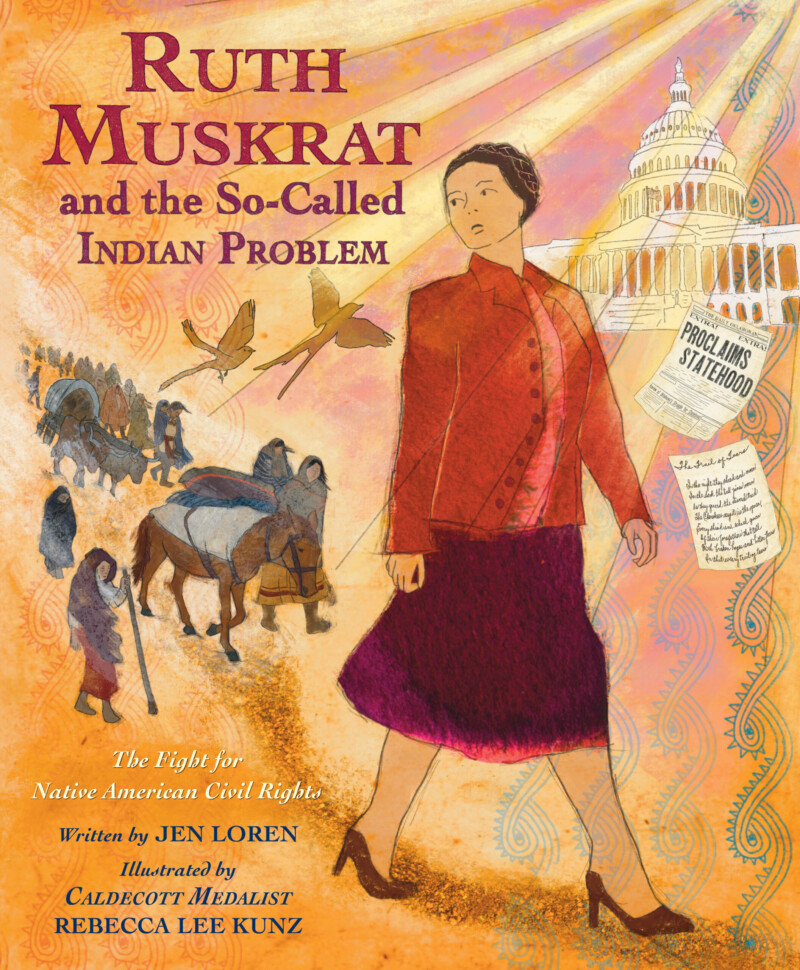
Sisters and Cherokee Nation citizens Jen Loren and Rebecca Lee Kunz understand the importance of storytelling, both as a way of sharing family lore and as a method of celebrating Cherokee history. With Ruth Muskrat and the So-Called Indian Problem, Loren, an Emmy award-winning TV host, filmmaker and senior director of Cherokee Film, and Kunz, an artist and Caldecott Medal recipient, recount the life of their aunt, Ruth Muskrat Bronson, a poet, educator and Native American rights activist. A beautifully illustrated and thoughtfully written book for a young audience, it’s a personal tale that will engage readers of all ages.
Muskrat was born in Indian Territory (pre-statehood Oklahoma) in 1897. Talented, determined and brave, she spent a lifetime advocating for Native American rights. It’s hard to overstate the importance of her efforts and accomplishments on behalf of Indigenous people. Among Muskrat’s many notable achievements was her appointment as the first Guidance and Placement Officer of the newly created Bureau of Indian Affairs. She also served as executive secretary, and later treasurer, of the new National Congress of American Indians.

Jen Loren and Rebecca Lee Kunz. Photo by Cody Hammer
Research, writing and illustrations
The book marks Loren’s debut as an author. As a journalist and mother, Loren says she always wanted to write books, but her career has been focused primarily on film and TV storytelling.
“My sister and I had dreamed about creating a book about Ruth for years, and when she began working as an illustrator, we knew the time was right,” says Loren. “I believe this is the perfect time for Americans to get to know Ruth. She was a brave and dynamic changemaker who never gave up against all odds and had a real impact on our history. I believe her story could inspire everyone who reads it in one way or another.”
Because this is a nonfiction work, Kunz says she did an enormous amount of research, paying particular attention to the technical content of her art to ensure its historical accuracy. She put a lot of pressure on herself to do her best work because the project was so personal. She’s proud of the result.
“Because this was such a personal project, I put a lot of care and attention into detail,” she says. “As I was making the art for this book, I asked myself, ‘How would Ruth want to be portrayed?’ And because I was working in partnership with my sister, whom I greatly respect, I was making this art with hopes that she would also relate to it.”
Kunz’s illustrations are layered with symbols that complement her sister’s narrative.
“Ruth was an impeccable, bold and graceful woman, and I wanted my illustrations to express her complexity,” she says. “I chose colors that reflected her personality. I chose symbols that communicate the challenges she faced as a poet and a Native American advocate in her time. Every detail I included was carefully chosen to tell Ruth’s story.”
A family legacy
Although the sisters collaborated on the project, they give their mother credit for her contribution to the family’s story.
“Our mother has an incredible memory and has taken on the role of family historian,” says Loren. “Since we were little girls, our mother has relayed stories that her grandmother relayed to her.”
When Loren and her sister began working on the book, their mother was a great source of information, pulling family keepsakes from the real-life trunk that figures prominently in the story and its illustrations.
“She’s very proud to be our family historian, to be a part of our Muskrat family, and that we are interested in sharing our history with the next generations,” says Loren.
Both sisters are inspired by Muskrat’s life and the impact it’s had on their family.
“I have shared stories of Ruth with my daughters over the years, and her legacy has undoubtedly had an impact on them. Coming from a lineage of supportive, tight-knit, strong women, they have grown up with the notion that women speak their minds and aren’t afraid to do hard things,” says Kunz. “The women in our family not only stand by one another but fiercely champion each other. I’m acutely aware of the impact this has had on my daughters’ sense of self.”
Where to find the book
Ruth Muskrat and the So-Called Indian Problem is available for purchase Oct. 6 from amazon.com, barnesandnoble.com, bookshop.org and levinequerido.com.
 Julie Wenger Watson is a freelance writer who’s worked in all aspects of music promotion. She’s also Co-Director of “Live From Cain’s,” a public radio show pilot.