A Calling of Their Own
Redefining what it means to balance faith, family and life in ministry.

For generations, the phrase “pastor’s wife” conjured a fairly specific image: a woman deeply embedded in church life, often working behind the scenes, supporting her husband’s ministry while quietly shaping the culture of the congregation. She might lead women’s groups, coordinate meals or serve as a steady, visible presence beside her husband on Sundays. Her identity was often closely tied to his calling.
But today, that picture is expanding—and in many cases, being redefined entirely.
Across Tulsa and beyond, women married to pastors are navigating a more complex, nuanced reality. Some serve on church staff. Others pursue careers outside the church. Many are raising families in the public eye while balancing expectations that are both spoken and unspoken.
And in some cases, like Melody Dixon, the traditional framework doesn’t apply at all—because she is the pastor.
This evolution reflects broader cultural shifts, but it also reveals something deeper about calling, identity and what it means to live a life of faith in a highly visible role.
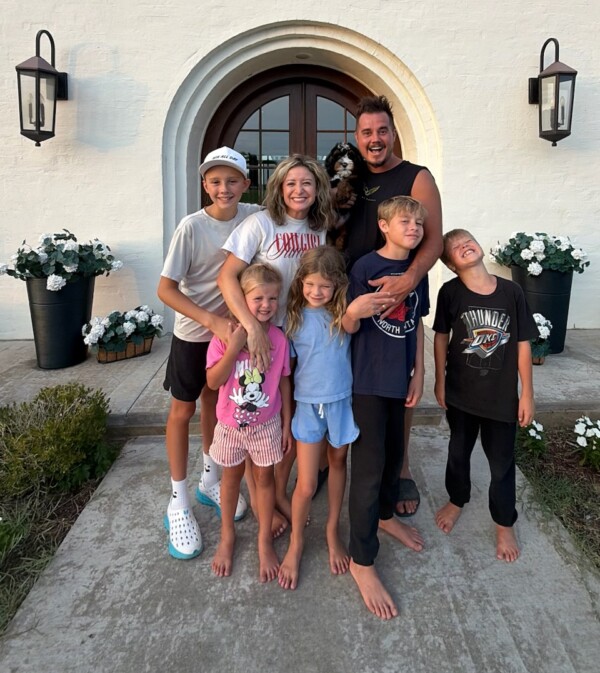
The Daugherty family
From Supporting Role to Shared Calling
Ashley Daugherty, who serves alongside her husband, Paul, at Victory Church in Tulsa, didn’t grow up imagining herself as a pastor’s wife.
“I never pictured myself as a pastor’s wife,” she says. “That wasn’t even on my radar as a career or path. I always saw myself more as an individual, with my own dreams and path to pursue.”
Her story reflects a common thread among many women in ministry today: Their calling is not simply an extension of their spouse’s—it’s personal.
Daugherty’s journey into ministry unfolded over time, through Bible college, internships and hands-on experience across multiple areas of church life. What began as curiosity became conviction.
“I fell in love with loving God and loving people,” she says. “And I realized my life could actually be used to help people and bring hope.”
Today, she serves in a pastoral role, leads teams and regularly teaches—responsibilities that would have been far less common for a “pastor’s wife” in previous generations.
Her story highlights a key shift: Many women married to pastors are no longer confined to a predefined role. Instead, they are stepping into leadership positions that align with their own gifts and calling.
No One-Size-Fits-All Model
If there’s one theme that emerges consistently, it’s this: There is no single way to be a pastor’s wife.
“Every wife of a pastor does it differently because every life is unique,” Daugherty explains. “Marriage, number of kids, upbringing, passions, skill sets—there are just so many variables.”
That flexibility can be freeing—but it can also be challenging.
Lindsay Nelson, whose husband, Matt, pastors CityChurch in Tulsa, felt a clear call to ministry early in life. But when she became a mother—quickly raising four children in just a few years—her priorities shifted.
“Raising my family has always been my top priority,” she says. “I’ve always felt that ministry will always be there, but I only get one chance at raising these humans.”
In the early years, Nelson wrestled with internal pressure to meet expectations she had placed on herself.
“I thought I needed to lead certain ministries or be in specific areas of leadership,” she says. “When in reality, I needed to be exactly where I was … raising my family.”
Her perspective underscores another important shift: Influence doesn’t always require a formal title. For some women, their primary ministry happens at home.
Balancing Family, Faith and Expectations
Perhaps the most visible—and often misunderstood—aspect of life as a pastor’s wife is the challenge of balancing family life with the demands of ministry.
Or, as Daugherty puts it, questioning whether “balance” is even the right word.
“I don’t really think we can balance it all,” she says. “I’m in the camp that believes balance is a myth. The reality is, I’m always adjusting.”
Instead of striving for a perfect equilibrium, many women describe a rhythm of constant recalibration—responding to the needs of their family, their church and their own personal well-being in different seasons.
“There are times when I feel like I’m winning as a mom and maybe losing a little at church,” Daugherty says. “And other times, the opposite. But as long as I’m not losing in the same area over and over again, that’s what matters.”

Melody Dixon
Melody Dixon, pastor of Life.Church Midtown Tulsa, approaches it from a slightly different angle. Rather than separating ministry and family, she sees them as integrated.
“Our church isn’t just my job—it’s our church,” she says. “It’s something we’re part of together as a family.”
Still, the demands are real.
Like many working parents, Dixon admits to moments of distraction—answering emails at a child’s game or mentally replaying conversations during family time. Over time, she’s learned that intentional presence matters more than simply being physically there.
“Being fully present is a gift,” she says.

The Nelson family
Living in the Public Eye
One of the most unique aspects of this role is the visibility that comes with it.
Whether officially on staff or not, pastors’ wives often find themselves under a microscope—both within their congregation and, increasingly, on social media.
That visibility can create pressure to appear “perfect,” even when no one explicitly says so.
“I think being a mom comes with pressure, whether the expectations of others are real or perceived,” Dixon says.
For Nelson, much of that pressure was internal.
“My struggle was the expectations I put on myself,” she says.
Daugherty echoes that sentiment, noting that while expectations exist, many are assumed rather than clearly defined.
“The truth is, I don’t actually know most people’s expectations,” she says. “And even if I tried to imagine them, I’d probably get it wrong.”
Social media has only amplified this dynamic.
“It can bypass the truth of what it really takes to be built for the long haul,” Daugherty says. “There’s a lot more opportunity for comparison.”
That comparison can lead to feelings of inadequacy—or, on the flip side, pride. Either way, it can distract from what truly matters.
“When I notice it’s affecting me, I’ll do a hard fast from social media,” she says.
Authenticity Over Perfection
If there’s a unifying theme among these women, it’s a commitment to authenticity.
“I want to be the same person at home as I am at church,” Dixon says.
That consistency isn’t about getting everything right—it’s about how they respond when they don’t.
“It’s not perfection that reveals our faith,” Dixon adds. “It’s how we respond when we fall short.”
Daugherty shares a similar perspective.
“One of the most genuine things about my husband and me is that we aim to be the same people offstage as we are on,” she says. “That doesn’t mean we don’t miss it—but when we do, we believe in repentance.”
This emphasis on authenticity is especially important for their children, who are growing up in the unique environment of church leadership.
“I don’t want my kids to feel pressure to act a certain way to represent me,” Dixon says. “Their faith is their own.”
Redefining Identity
Perhaps the most significant evolution in the role of the pastor’s wife is the shift in identity.
For previous generations, the role often defined the person. Today, many women are working to define the role for themselves.
“I am the wife of a pastor,” Daugherty says. “But that can easily become an identity … Every life is unique.”
That distinction matters.
Women like Nelson have found freedom in embracing their primary calling—whether that’s raising children, serving their community or leading in a specific area of ministry.
Dixon’s story pushes the conversation even further. As a pastor herself, she represents a growing number of women whose leadership roles don’t fit within traditional labels at all.
Her experience reframes the conversation: Instead of asking what a pastor’s wife should be, the question becomes broader—what does it look like for women to live out their calling in and around the church?
A New Picture of Ministry Life
What does family life really look like in this evolving role?
It can look like four kids and a full church calendar. It can look like tennis matches, school volunteering and late-night conversations about priorities. It can look like seasons of stepping forward and seasons of stepping back.
It looks imperfect.
And maybe that’s the point.
“I’ve made a decision that I want to love my life,” Daugherty says. “Because if I want to love my life for the long haul, I can’t meet every expectation.”
 Lindsay Morris is a native Tulsan, writer and founder of Tulsa Places, where she highlights local businesses and family fun. She works in healthcare marketing and communications.