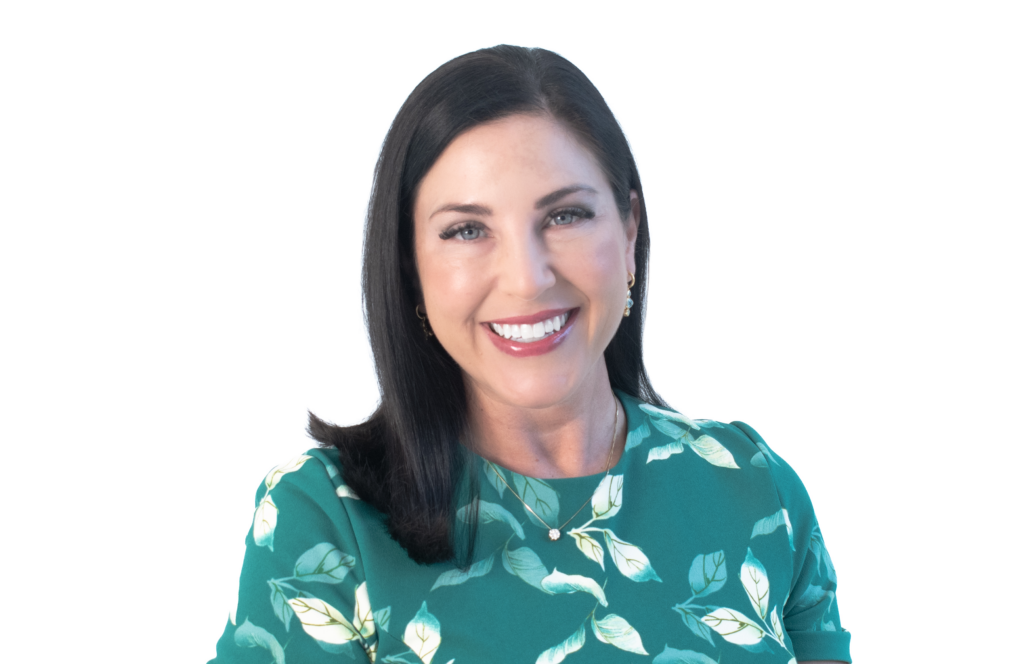
Impactful Women of the 918: Dr. Ryan Elizabeth Parker
Associate Chief Medical Officer and Vice President for Graduate Medical Education, Saint Francis Hospital


Ryan Elizabeth Parker knew early on that she wanted a career centered on helping others. Inspired by her father, a police officer, she was drawn to emergency medicine and its combination of public service, science and problem-solving.
Today, Parker is an emergency physician and serves as associate chief medical officer and vice president for graduate medical education at Saint Francis Hospital. Shortly before the COVID-19 pandemic, she became system medical director, an experience that helped shape her approach to leadership.
Parker often returns to the words of Corita Kent, a former Catholic religious sister who became an artist and educator: “Flowers grow out of dark moments.”
“Difficult moments or times where you can’t see the path forward truly provide the opportunity for growth,” Parker says. She believes effective leadership means being present, consistent and willing to admit you don’t always have the answers.
“What makes me the most proud is to watch the little acts of service and kindness that happen when our staff aren’t aware that someone was watching,” she says.
Outside of Saint Francis, Parker serves on the board of The Grief Center. She and her husband, Barry, have three children, and Parker says her family is her greatest joy.
Q&A with Dr. Ryan Parker
Can you describe your role at Saint Francis and what your work involves today?
I am an emergency physician by training, and I do work clinically very part time (1-2 shifts per month) in the emergency department. But my primary role is the associate chief medical officer and VP for graduate medical education at Saint Francis Hospital.
Effectively, a chief medical officer handles physician relations within the hospital and the community, as a partner and dyad to the nursing leadership on patient care, quality improvement, regulatory requirements and operational efficiency. I also am responsible for overseeing the medical and PA student rotations and residency programs that rotate at Saint Francis Hospital in partnership with OU and OSU.
What inspired you to pursue medicine, and how did your career path lead you to your current leadership role at Saint Francis?
I was inspired to go into medicine by my family. My dad was a police officer when I was growing up. I really admired and was intrigued by his work of being a public servant. I noticed that he was able to impact people who were in a vulnerable state and help them. The summer after I graduated from high school, he helped me get a summer job as a tech at our local emergency department in the town that I grew up in. It was the perfect combination of public service, biology, psychology and problem-solving that really intrigued and inspired me. It is fast-paced, organized chaos and constantly changing. You get to meet people from all walks of life — every race, age, gender, culture, religion. It is the entry point to health care (and sometimes the only health care) that some people experience. It feels good to meet that need 24/7/365.
You’ve helped lead Saint Francis through extraordinary challenges, including the COVID-19 pandemic. What have those experiences taught you about leadership and resilience?
I had several smaller leadership roles prior to Saint Francis. I was chief resident during my training and became an associate medical director of the ED at Baylor Hospital in Dallas before we moved here in 2018. I think my typical approach to most things is: What can I help with? And then I just try to give it my full effort. There is always something that can be done more efficiently, effectively or smoothly. At Saint Francis, I accepted the role of system medical director about two months before the COVID-19 pandemic was declared. Leading through that gave me confidence, creativity and a comfort with trying a new process and working together with a team to improve it. Because of the relationships built and hard work during COVID-19, I was promoted to my current role in 2022.
There is a beautiful quote that I love from a former religious sister who became an artist and educator, Corita Kent. She said, “Flowers grow out of dark moments.” I interpret that to mean that difficult moments or times when you can’t see the path forward truly provide you the opportunity for growth. Eventually, something beautiful and illuminating emerges. Facing challenges gives you the opportunity to start becoming more confident, more creative, more tolerant of the setbacks and more driven to keep pushing forward. Leadership at its best will inspire the same in others and feels infectious. But you have to be present and consistent for it to be the most effective. Leading through challenges has taught me it’s OK to admit you may not have all the answers; you may not even be the best person to tackle the specific issue that is the most pressing of the day. But showing up every day with a positive attitude and sincerely supporting your team is impactful and appreciated.
What accomplishment or initiative are you most proud of in your work at Saint Francis?
We have achieved some national recognition for quality and for being a center of excellence for several of our programs, and that is exciting. But honestly, what makes me the most proud is to watch the little acts of service and kindness that happen when our staff aren’t aware that someone was watching. I also love witnessing the full-circle moments of students or staff who finish their education and come back in different or advancing roles to continue caring for patients.
Outside of your role at Saint Francis, are there organizations, volunteer work or community efforts that are especially meaningful to you?
I volunteer and am on the board of directors at The Grief Center, which is an amazing nonprofit that helps people find hope as they walk through the loss of a loved one. They have an office that hosts family and individual counseling sessions and support groups. The art and play therapy rooms are my favorite. They provide crisis responses to schools, businesses and groups after a tragedy. (That is how I became acquainted with them when they offered their services at Saint Francis.) We also host Camp Erin yearly at the Camp Loughridge grounds. This weekend camp allows kiddos from first grade to high school to meet others who have gone through the loss of a loved one and enjoy being a kid while also being allowed to openly discuss and express their grief. It is truly an honor to meet and serve the kids. I also work alongside some very inspirational Tulsans who are just trying to help someone in their community who is going through maybe their toughest time.
What does being recognized as one of TulsaKids’ Impactful Women of the 918 mean to you?
Being recognized was a huge surprise, honestly, but I was very honored. Although I am not a native Tulsan, I love this community immensely.
I owe such a debt to the female mentors and role models who have encouraged me, pushed me, inspired me and made space for me. I am very grateful for the opportunities I have been given in my life, and it’s so important for me to give back. This recognition is so cool, and even better that it involves the company of some amazing women! Taylor Swift summed it up best: “Other women who are killing it should motivate you, thrill you, challenge you and inspire you.”
Anything you would like to share about your family? Hobbies or interests?
I’ve been married to Barry for 19 years, and I am the mom to Graham, a sophomore at Bishop Kelley, and twins Collyn and Hayes, seventh graders at Monte Cassino. My family is my greatest joy, and they support me in my sometimes clumsy and overlapping balancing act between work and mom mode.