Taking the Leap to Pre-K
Sending a 4-year-old to school can feel like a big step, but educators say the benefits can last a lifetime.
Despite Oklahoma’s nationally recognized universal prekindergarten program, some schools are struggling to fill classrooms.
Educators say that’s concerning because pre-K helps children develop the academic, social and executive-function skills they need for success in kindergarten and beyond.
“It’s hard when your child is young to ever feel like they’re ready to leave you, but I think the benefits (of pre-K) outweigh that,” said Jordan Sheffield-Mix, director of early childhood education for Tulsa Public Schools, which provides full-day prekindergarten five days a week at every elementary school.
Pre-K “sets them up for success for the rest of their school career and their lives,” she said.
There’s some irony that Oklahoma schools are struggling to fill pre-K programs. The state pioneered one of the most successful early childhood education models in 1998 with state-funded, universal, free programs for all 4-year-olds via public schools and featuring highly qualified teachers.
“We are very lucky in the state of Oklahoma,” Sheffield-Mix said. “That’s actually not a norm. That’s a huge advantage that we have.”
TPS saw a lot of growth in its pre-K program in the years leading up to the COVID-19 pandemic, when in-person schooling declined across the board, Sheffield-Mix said. Although the numbers have rebounded somewhat, plenty of slots are still available.
“There really, truly is space for pretty much any kid in Tulsa who wants to attend pre-K,” she said.

Trixie Smith will attend Sand Springs Public Schools’ prekindergarten program in the fall, having taken part in a recent “signing day” event at the school district’s Early Childhood Education Center. Sand Springs and Tulsa are two area school districts reporting sluggish pre-K enrollment.
Why Are Families Opting Out?
Carrie Schlehuber, assistant superintendent for special education and enrollment for Sand Springs Public Schools, said pre-K enrollment is down some in her district, too.
“Sometimes parents just don’t feel like they are ready for their child to start school,” she said.
Schlehuber said she suspects that parents are either waiting to enroll their children in kindergarten – skipping pre-K altogether – or are choosing other options, such as Mother’s Day Out programs or private daycare.
“There’s more flexibility in a program that’s not five full days a week,” as is the pre-K program offered at Sand Springs’ Early Childhood Education Center, she said. “And those programs are great. There’s just a difference in those and in getting an education from a certified teacher.”
Building Skills for School and Life
Sheffield-Mix said pre-K “is the foundation. It sets such a strong foundation for the rest of their school career and life. They are learning social and executive function skills – how to share; how to wait; how to be part of a community.”
“Not to mention the important math, reading and language skills that give you such an advantage as you go into later grades,” she said.
Schlehuber recalled a piece she read by an education expert that said children have three “worlds.” The first two are home and school. Traditionally, the third has been a park, the ball field, dance class, church or even just the neighborhood.
“Now,” Schlehuber said, “the third place is a screen.”
“Children younger and younger are getting put on tablets and phones and televisions, and you cannot learn language, social development or problem-solving from an app or a show,” she said.
“When we have students who don’t spend that first pivotal year with us in pre-K, we’re seeing a lot more behavioral and academic concerns once they reach elementary school.”
Should pre-K be required?
“I don’t know that I think it should be required, but what I would like to see is that if you enroll, attendance becomes mandatory,” Schlehuber said, adding that it’s helpful when families are in the habit of thinking of school as routine.
“What we see is if they struggle with things like attendance at that level, they will continue in the same trajectory once they reach elementary school,” she said.
It’s good for parents to have a choice to do what is best for them and their child, and TPS offers a variety of programs to help meet those needs, Sheffield-Mix said, pointing to dual-language programs, where prekindergartners learn in Spanish for half the day and English for half, and the Montessori educational approach, which is offered at three TPS sites.
“But what I come back to is always the research that shows how beneficial pre-K can be,” she said. “They’re a sponge at that age, and it’s hard to ignore the long-term effects that pre-K can have.”

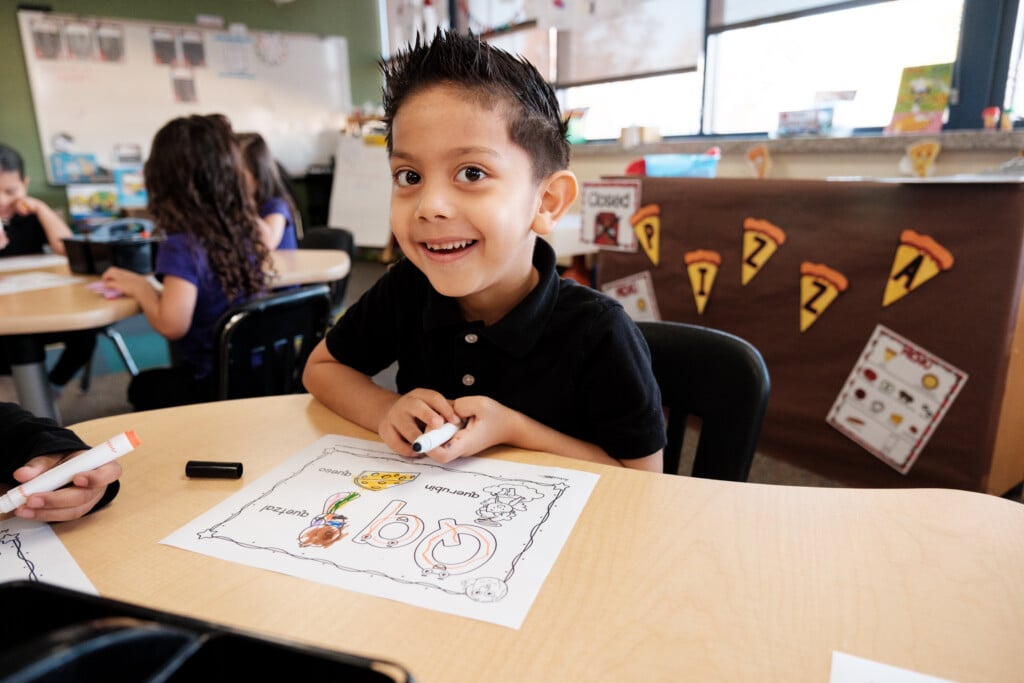
Pre-K students at Felicitas Mendez International School.
Getting Started
To enroll in prekindergarten statewide, children must turn 4 by Sept. 1 of the year in which they’re enrolling.
Tulsa Public Schools
Online: tulsapublicschools.org/enrollment
In person: Enrollment Center, 2819 S. New Haven Ave.
Parents/guardians should bring (if available) their state-issued ID; proof of address (utility bill, lease, etc.); child’s immunization record; and child’s birth certificate.
Sand Springs Public Schools
Online: sandites.org/page/enrollment-center
In person: Enrollment Center, 14 W. Fourth St.
Call 918.246.1448 or email enroll@sandites.org to make an appointment.