Reel Summer Fun: Fishing in Tulsa
Fishing offers kids and teens a chance to unplug, learn patience and spend time outdoors.
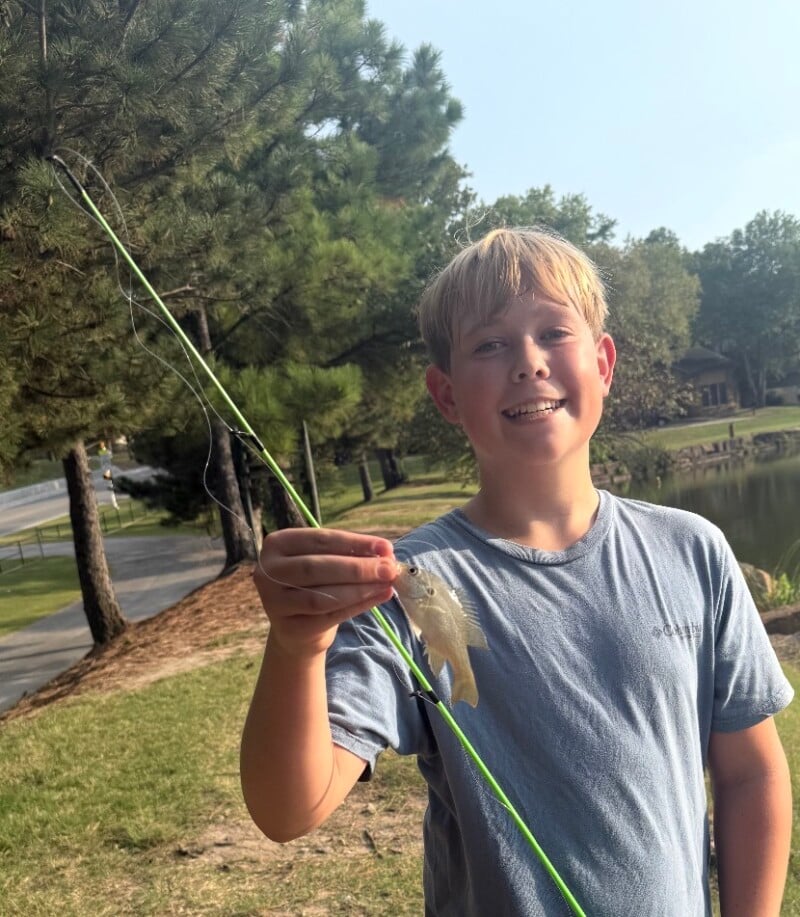
As a parent in the age of ubiquitous “screens,” it often feels like your job consists of trying to keep your kids off of them. It’s no secret there’s an ugly side to social media and excessive gaming, but resisting the siren song of technology is tough. If you’re searching for a summer break activity that doesn’t involve tech, try the closest fishing hole.
Cast a wide net
Whether you’re after a prize bass or just looking for some crappie to fry, learning to fish is a valuable experience with a surprising number of mental and physical benefits. Spending time in nature has been shown to reduce stress, lower blood pressure, improve mood and even enhance immune function. It can also spark creativity. Angling teaches an appreciation of aquatic ecosystems, and fishermen (and women!) are often good stewards of the environment. Anyone who’s ever cast a line knows that fishing can develop important life skills like patience, persistence and problem solving. Finally, fishing provides a wonderful chance to bond with family and friends.
Inspired by the Animal Planet series River Monsters, which chronicles the exploits of extreme angler Jeremy Wade, some students of Bishop Kelley High School science teacher Caroline Jones started their own catch-and-release fishing club last fall. As the club’s advisor, Jones thinks it’s a great way for students to meet others with similar interests, as well as an opportunity to teach conservation.
“I think the purpose of any club is camaraderie. A lot of the fisher-type people are introverted, so it’s nice to have a shared activity outside of sports or school,” she says. “I also want them to get outside to just have some fun and appreciate nature.”
The club has about 15 members, both male and female. Some have significant fishing experience, while others are new to the sport. Jones, who rates her own angling skills as “not very good,” appreciates the way the students help each other, sharing equipment and advice.
“It’s interesting to see students in such a different light with something that they’re passionate about, and they get to teach me, too,” she says.

Getting started
If you grew up in Oklahoma, chances are good you know someone who knows how to fish. Even though they may not share the location of their favorite fishing hole, most fisherfolk are happy to help a new angler get started. Stores like Walmart, Bass Pro Shops or any sporting goods store carry entry-level fishing rigs for around $30-$50 (a Zebco 33 is highly recommended), and if you’re crafty, you can make your own.
“You don’t have to have fancy gear,” says Jones. “You can literally use a piece of cane and a piece of hotdog on a string.”
In Tulsa, recreational fishing is allowed at most public bodies of water. The state Wildlife Conservation Department (ODWC) and municipalities across Oklahoma are partners in a “Close to Home Fishing Program” that stocks and manages small bodies of water in urban areas. This includes city park ponds at Braden Park (5036 E. Seventh St.), Hunter Park (5804 E. 91st St.), and two ponds at the southeast corner of Mohawk Park. The ODWC also offers free fishing clinics at various locations around the state. Although everyone must comply with ODWC regulations, Oklahoma residents under the age of 18 aren’t required to have a fishing license. For more information, visit wildlifedepartment.com.
Scheels in Tulsa also offers free or low-cost fishing courses; visit facebook.com/tulsascheels. Bass Pro Shops also offers fishing classes; visit facebook.com/bassproshopsbrokenarrowok.