Pi Day: Everybody Belongs in the Circle
A celebration of math and the simple joy of learning together
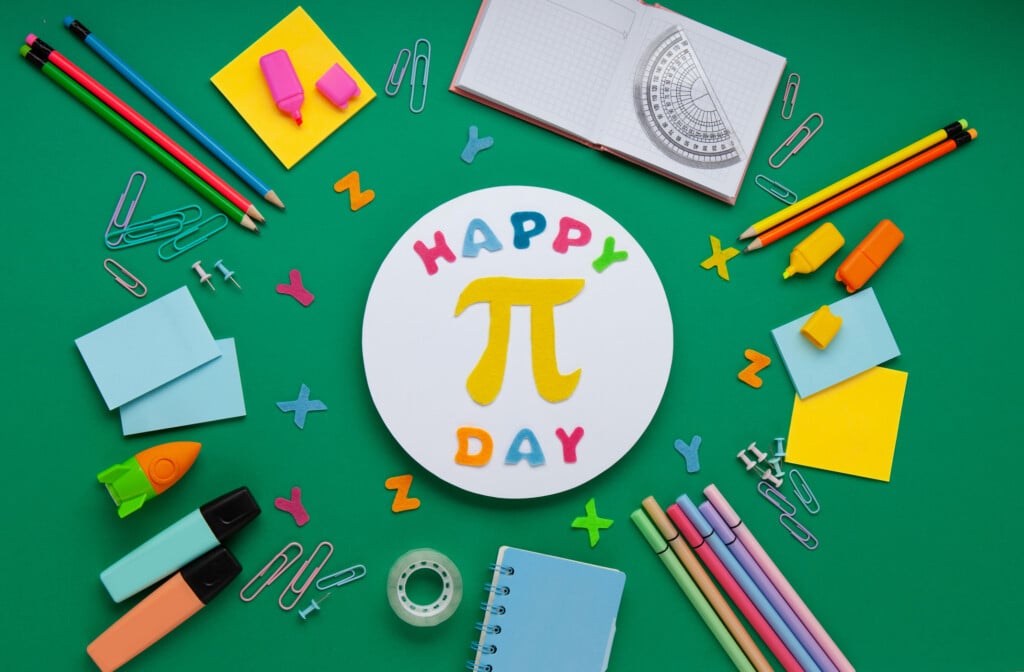
March is already doing the most. Spring is peeking around the corner, kids are bouncing off the walls, teachers are counting down to warmer days—and right in the middle of all that energy sits one of the most underrated and joy-filled school celebrations of the year: Pi Day.
Celebrated every year on March 14, Pi Day gets its name from the mathematical constant pi, which begins with the digits 3.14. That simple numerical connection has turned into a global celebration of learning, curiosity and creativity, and schools quickly realized it was the perfect excuse to make math feel less intimidating and a lot more fun. You don’t have to be a math person to appreciate Pi Day. The language of fun is universal, and Pi Day speaks it fluently, bringing circles, laughter, connection and a very good reason to integrate pie into the school day.
This year, Pi Day also lines up beautifully with the International Day of Mathematics theme, Mathematics and Hope. While that might sound big and serious, elementary schools already live this idea every day. Hope looks like students trying again after a mistake, helping a classmate who is struggling, and learning that problem-solving applies to more than numbers on a page. Pi Day gives schools a playful way to wrap all of that into one shared experience that feels light, joyful and memorable.
You Matter to Infinity Wall
One of the easiest ways to kick off the celebration is with a schoolwide You Matter to Infinity wall. Set up a large bulletin board or hallway space and invite every student to add a paper circle with a kind word, a drawing or a positive message. Younger students might draw pictures or dictate their thoughts, while older students can write affirmations or encouragement for others. As the day goes on, the wall fills with color and personality, quietly sending a powerful message that every student belongs and every voice matters.
Kindness Circles
Inside classrooms, teachers can create space for Kindness Circles. Students sit together in a circle and share compliments, encouragement or appreciation with one another. Teachers can model what this looks like and offer sentence starters to help students feel comfortable. These moments often surprise adults with how sincere kids can be when given the chance, and they help students see that kindness and communication matter just as much as academics.
Pass the Pi
To spread that positivity across grade levels, schools can try a Pass the Pi activity. Each class creates a large paper pie divided into slices, filling each one with positive messages, drawings or words of encouragement. Once finished, the pie is delivered to another classroom with a short note letting them know they are appreciated. Students love knowing their words traveled beyond their own room, and receiving encouragement from another class adds an extra layer of excitement.
Everyone Belongs in the Circle
Hallways can become part of the celebration with an Everyone Belongs in the Circle display. Students trace and decorate their hands, which are then arranged into one large circle on the wall. The visual is simple but powerful, reminding students and adults that inclusion is not a slogan—it’s a daily practice. Some schools extend this idea with a We’re All Connected yarn circle, using yarn or string to link classrooms throughout the building. Teachers can explain that just as circles and numbers connect in math, people are connected through kindness, teamwork and shared responsibility.
Staff Pie Parade
And then there is the moment students will talk about long after Pi Day is over: the Staff Pie Parade. Staff members visit classrooms delivering pie or pie-themed treats (depending on school guidelines), along with words of encouragement and appreciation. Seeing principals, counselors, office staff and teachers showing up together sends a clear message that the entire school community cares. It is joyful, memorable and reinforces that school is a place where students are celebrated as whole people.
Pi Day doesn’t need to be complicated or overly academic to be meaningful. When schools lean into connection, kindness and community, math becomes a doorway instead of a barrier. In a world that often feels heavy, a day filled with laughter, encouragement and shared experiences matters more than we sometimes realize. If students walk away remembering that learning can feel good, that they belong in the circle and that school can be a place of joy, then Pi Day has done exactly what it was meant to do.
What is Pi Day?
- When: March 14
- Why: The date matches the first digits of pi (3.14)
- First celebrated: 1988
- Bonus: March 14 is also the International Day of Mathematics
- Fun fact: Pi is infinite—it never repeats and never ends
 Dr. Tamecca Rogers serves as Director of Student Access and Success at Tulsa Technology Center. An award-winning author and filmmaker, she is committed to diversity, equity and inclusion in all her endeavors. Photo by Denice Toombs-Dotson with Lasting Impressions Photography.