Getting Ready for Kindergarten
How to know if your child is prepared—and how to build skills at home.
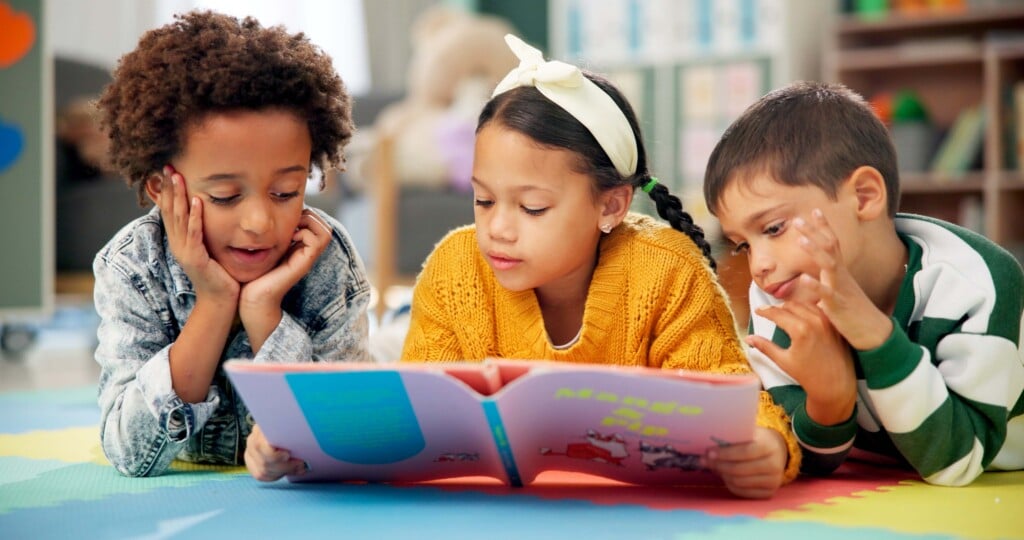
Kindergarten is a significant milestone in a child’s development, as they enter a new world of socialization and education. This step can be magical and memorable, but it can also be challenging if a child is not yet ready to transition to a classroom setting. How can parents determine whether their child is ready for this stage of school?
Diana Snow is a National Board-Certified Teacher with 36 years of teaching experience. Currently, she serves as the Family and Children’s Resource Specialist at Creekwood Early Childhood Center in Broken Arrow. Her work focuses on children, families and teachers, and includes helping parents understand developmental readiness and assisting pre-K teachers with best practices in early childhood education. Additionally, she works with her students to develop social-emotional and problem-solving skills.
In her experience, it is important to assess a child’s level of independence, as well as their social, emotional and adaptive behavioral skills, when determining whether it is time for kindergarten.
What Kindergarten Readiness Really Means
“Readiness can be academics, but what is really needed are kids who have some independence and can follow two-step verbal direction,” said Snow. “Those kinds of things that make you ready to learn.”
Some questions parents might ask themselves include whether their child can focus on tasks and whether they have enough discipline to stay on task during teaching time.
“Can they sit and attend to a story? Can they stay engaged in an activity that is technology-driven for 10 to 15 minutes?” said Snow. “Can they handle redirection from another adult who is not the parent?”
Peer engagement can also be a factor. How a child gets along with their siblings can be a gauge of this skill, as can interactions with friends during play.
Independence Matters More Than Worksheets
A degree of independence is crucial for their kindergarten success as well. Although it is not uncommon for some children to cry for their parents when left at school, it is nonetheless heartbreaking. It’s important for children to practice separating from parents during the school day to help avoid prolonged distress. Independence skills such as loading a backpack, opening a lunchbox and wrapped food items, putting on a coat, using the bathroom and redressing help set children up for success—for the student, the teacher and the classroom as a whole.
Working with children to develop independent skills is a significant responsibility for parents, but it can also be an extraordinary adventure together in ensuring a solid foundation for the student’s future. Interruptions during the day to address readiness issues can affect not only the student’s learning but also the entire classroom.
“We are in a partnership with parents, and we can help them along,” said Snow. “Kindergarten is that building year, the year that gets you ready for your prereading skills, letters and sounds, rhyming and recognizing syllables; learning that is appropriate for the age and meets the state’s standards.”
Learning Happens Everywhere
Preparing a child for kindergarten doesn’t have to be a chore—it can be a challenge fused with fun.
“I call it incidental learning,” said Snow. “Read to them. Talk to them. When you’re walking through the grocery store, make it a game and say, ‘We are going to find all the letters in the store today,’ or ‘We are going to weigh all our fruit.’ Anything like that can really help kids get those language skills.” When children begin kindergarten, it is helpful if they already know all their letters, can count and recognize colors.
Snow has noticed a deterioration in language and speech skills in young students that she attributes to the increased reliance on technology and screens to entertain children.
“I would say for parents, don’t use technology too much. Our kids are so used to being visually stimulated and watching things that they have a hard time just listening. That is a challenge for teachers to hold a child’s attention in the classroom. We are seeing so many more students who need speech services for either articulation or expressive and receptive language,” she said. “Talk to your kids and spend quality time with them.”
Another side effect of too much screen time can be a loss of motor skills. It is helpful for students to be able to hold a pencil or use safety scissors. “We have to teach them those skills,” said Snow. “If they can string beads or do puzzles—anything that gets that fine motor build up is good for their development.”
A Parent’s Perspective
From a parent’s perspective, sending a child to kindergarten can be both overwhelming and rewarding. Katy Jones is the mother of six children, ranging from ages 7 to 20. She has taught 8th-grade English for almost 17 years and recently earned a master’s degree in educational leadership. She has six times the experience in kindergarten adventures and the wisdom to share.
“My best advice for parents and guardians is to take a deep breath, trust that your kids are going to be in great hands and help your child build excitement before the big day,” said Jones. “It was hard sending my oldest off to school because it’s one of those milestones that can break a mama’s heart, but it is also such an exciting time for everyone.”
When her first child began kindergarten, she wondered whether he would cry from fear and whether she had taught him enough to be ready. It concerned her whether he would be on the same level as other kids in his class, make friends and be able to ask for help when needed.
“I stressed about everything. You name it, I worried about it,” she said. “I would say to trust that your child’s teacher is a loving, caring professional who will take good care of their students, and they will let you know if your child is struggling with any of those things. This should be an exciting time for everyone, and I wish I could go back and enjoy it more and stress less.”

Diana Snow. Photo by Macy Goodnight
Mrs. Snow’s Everyday Learning Guide
Simple ways to build kindergarten skills at home
At home:
- Find letters on cans and boxes of food in the kitchen. This promotes letter recognition and reading environmental print. Children can also learn to distinguish between words and letters.
- Look for numbers in the kitchen for numeral recognition.
- Allow kids to scoop measuring cups while baking. This is great for motor skills, following directions and counting. It also allows opportunities to explore how two half cups equal a whole cup, etc.
- Cutting fruit, such as bananas or strawberries, with a plastic knife builds fine motor skills.
- Setting the table is perfect for one-to-one correspondence.
- Allow your child to draw, cut paper or play with playdough. These activities build hand strength.
- Take nature walks and talk about what you notice. This is a great opportunity to teach vocabulary such as hard, smooth, bumpy, rough, big, small, tall, short and other descriptive words.
At the store:
- Look for letters in your child’s name on various products.
- Weigh fruits and vegetables.
- Color recognition is fun in the produce section.
- Have your child count the apples or oranges you are adding to the bag.
- Paying with cash? Teach your child coin recognition. Let them keep the coins they could recognize.
In the car:
- Count cars of a certain color as you drive down the road. This builds attention to detail and helps with counting skills.
- Rhyming games are great for a car trip. See how many words you can think of that rhyme with cat or dog. It’s OK to create nonsense words.
- Make up a silly story about something your child is interested in.
Kindergarten Enrollment in Oklahoma
Children who turn 5 on or before Sept. 1 are eligible for public kindergarten. Students must meet state immunization requirements and attend a full- or half-day program.
Learn more at oklahoma.gov/education
 Macy Goodnight is a freelance writer and photographer from Broken Arrow. She loves spending time with her family and friends, and has an interest in studying history, gardening, hiking and traveling.