Rethinking Sibling Rivalry
When sibling rivalry is more than competition: A trauma-informed look at jealousy, safety and connection at home.
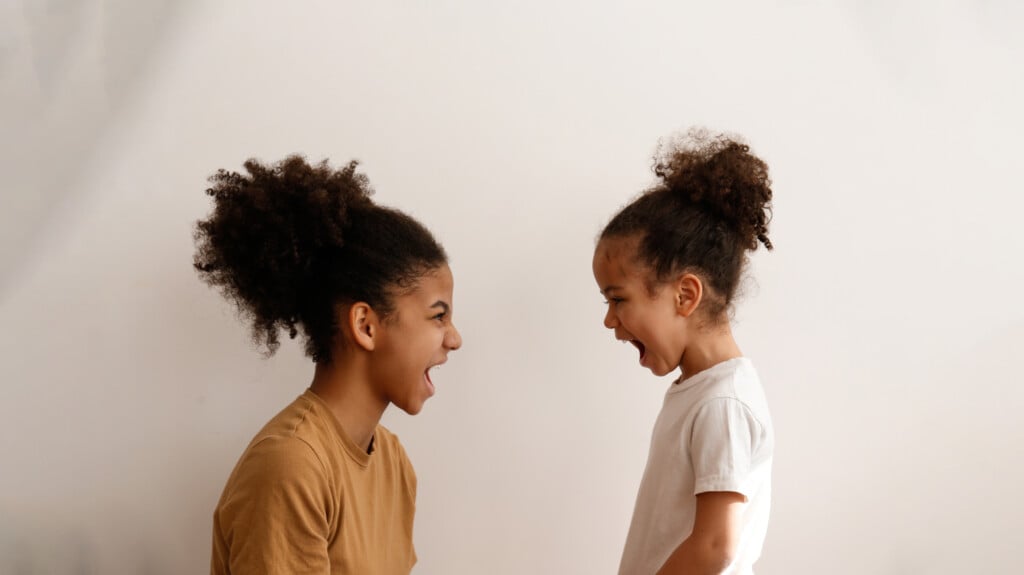
Few things test a parent’s patience like sibling rivalry. The constant arguing, comparisons, hurt feelings and cries of “That’s not fair!” can leave caregivers feeling overwhelmed and unsure of how to respond. It’s tempting to see sibling conflict as competition, misbehavior or something children should simply “grow out of.”
A trauma-informed lens invites a different understanding: Sibling rivalry is often less about rivalry and more about safety, connection and belonging.
Jealousy Is a Stress Response, Not a Character Flaw
Jealousy is frequently misunderstood. When a child reacts strongly to a sibling—by acting out, withdrawing or demanding attention—it’s easy to label the behavior as manipulative or immature. In reality, jealousy often signals fear: Will there be enough care, attention and safety for me too?
When one child in a family is struggling, another often attempts to regain connection in their own way. For example, during periods of illness, emotional distress or increased parental focus on one child, siblings may become more physically clingy, seek extra reassurance or withdraw altogether. Children may not have the words to express fears like, “I’m scared the family is changing,” or “I don’t know where I fit right now.”
Common triggers for sibling jealousy include:
- Changes in routine or schedule
- School transitions or increased academic stress
- Illness, exhaustion or parental stress
- Shifts in attention toward a sibling
When children feel uncertain, their bodies often respond before their words do. Even children who feel excited about a new sibling may struggle with separation, routine changes or fears about being replaced, leading to tearful mornings or increased emotional reactions. This doesn’t mean siblings shouldn’t have limits or expectations. It does mean that behavior is communication, and jealousy often signals a need for reassurance.
Why “Just Be Nice” Rarely Works
When emotions run high, parents often default to quick fixes: separating children, assigning blame or insisting everyone calm down and get along. While these strategies may stop the conflict temporarily, they don’t address what’s happening underneath.
When a child is dysregulated, their brain is operating in survival mode, making it difficult to access logic, empathy or problem-solving skills. Telling a child to “use your words” or “stop overreacting” assumes a level of regulation they may not have in that moment. And when children don’t have access to the skills we’re demanding, they often respond with more intensity—not because they don’t care, but because they’re overwhelmed.
Trauma-informed care reminds us that regulation comes before resolution. Before children can problem-solve together, they need help settling their nervous systems. That might look like a deep breath with you, a drink of water, stepping into another room, squeezing a pillow, or simply hearing you say, “I see you. I’ve got you. We’ll handle this.”
The Role of Adult Regulation
One of the most powerful tools in sibling conflict isn’t a strategy—it’s the adult’s regulated presence.
Children take emotional cues from the adults around them. When parents remain grounded, speak calmly and avoid taking sides, children feel safer. This doesn’t mean we ignore harmful behavior. It means we address it without adding fear, shame or humiliation.
A regulated adult can say, “I see that you’re really upset right now. I’m here, and we’ll figure this out,” instead of escalating the situation with raised voices or immediate consequences.
The goal isn’t to “let things slide.” The goal is to keep the moment emotionally safe enough for learning to happen. When adults jump straight to punishment, children often become more defensive and less reflective. But when adults stay steady, children learn something far more valuable over time: Big feelings don’t threaten relationships. Children can be upset and still be safe.
Fair Isn’t Always Equal
Sibling jealousy often flares around fairness. Trauma-informed parenting reframes fairness not as equal treatment, but as meeting each child’s needs.
One child may need more reassurance. Another may need more space. A third may need help naming feelings. When parents explain that different support doesn’t mean less love, children slowly begin to internalize a sense of security.
Naming this explicitly can be powerful: “Everyone in this family gets what they need to feel safe and supported. That won’t always look the same.”
For example, one child may seek physical closeness and affection to feel connected, while another may need space and quiet before they are ready to talk. Expecting children to regulate or connect in the same way can escalate stress rather than resolve it. Supporting children well requires knowing them well.
Teach Repair, Not Perfection
Conflict between siblings is inevitable—and it isn’t inherently harmful. In fact, sibling conflict can become one of the safest places children learn communication, empathy and problem-solving skills—if adults help guide it appropriately.
What matters most is what happens after the conflict.
Trauma-informed parenting emphasizes repair over punishment. Helping children reflect once they’re calm, encouraging empathy, and modeling apology and accountability teaches skills that last far longer than forced apologies in the heat of the moment. If we demand apologies too quickly, children learn to perform remorse rather than feel it.
Repair conversations might include:
- “That was hard. What were you feeling?”
- “What did you need in that moment?”
- “What do you think your sibling needed?”
- “How can we make it right now?”
Repair teaches children that relationships can bend without breaking. It shows them that conflict doesn’t equal rejection. That’s a powerful lesson—especially for children who are more sensitive, more anxious or carrying stress they can’t fully explain.
Practical Ways to Respond in the Moment
Sibling conflict will happen again—probably within the next hour if we’re being honest—so having a few trauma-informed phrases ready can help.
Try responses like:
- “I won’t let you hurt each other. I’m stepping in.”
- “You’re both having big feelings. I’m here.”
- “We’re going to take a pause and reset.”
- “You don’t have to compete for my love. There’s enough.”
- “Tell me what you wanted, not what your sibling did.”
These statements do two things at once: They set boundaries while also communicating emotional safety. They help children feel contained rather than cornered.
A Gentler Way Forward
Sibling rivalry doesn’t mean something is wrong with your family. It means children are learning how to navigate relationships while their brains and nervous systems are still developing. It means they’re practicing disappointment, frustration, compromise and repair—skills they’ll need for the rest of their lives.
When parents respond to jealousy with curiosity instead of criticism, boundaries instead of blame, and connection instead of comparison, children learn a powerful lesson: There is enough safety, care and belonging for everyone.
And in that safety, rivalry slowly gives way to trust.
Not because siblings never fight again—but because they begin to believe: Even when things feel hard, relationships can remain safe.
Kids Are Always Watching
Fairness conversations matter because kids are always watching. They watch who gets comforted first. They watch who gets corrected most. They watch who seems to “need more” of you. A trauma-informed approach helps parents respond in a way that keeps the relationship intact—not just the household quiet.
Brandy Browne is an embedded therapist at Tulsa Public Schools and a licensed marriage and family therapist candidate.