Therapy Sloths at Anchored in Hope
At Anchored in Hope, rescued sloths Shiloh and Simon help clients practice patience, boundaries and emotional calm
At Anchored in Hope in Bixby, therapy sometimes includes an unexpected visitor. Two of them, actually — Shiloh and Simon, a pair of two-toed sloths who live at the practice founded by therapist Ashley Wale-Beers.
Beers uses the sloths as part of animal-assisted therapeutic work with both children and adults. Sessions typically happen first in a therapy room, then — depending on the goals of the session — clients may have time to visit the sloths.
The animals aren’t there as a novelty. They are integrated carefully into the therapeutic process, helping clients practice skills such as emotional regulation, listening and respecting boundaries.
And then there’s the simple fact of seeing them.
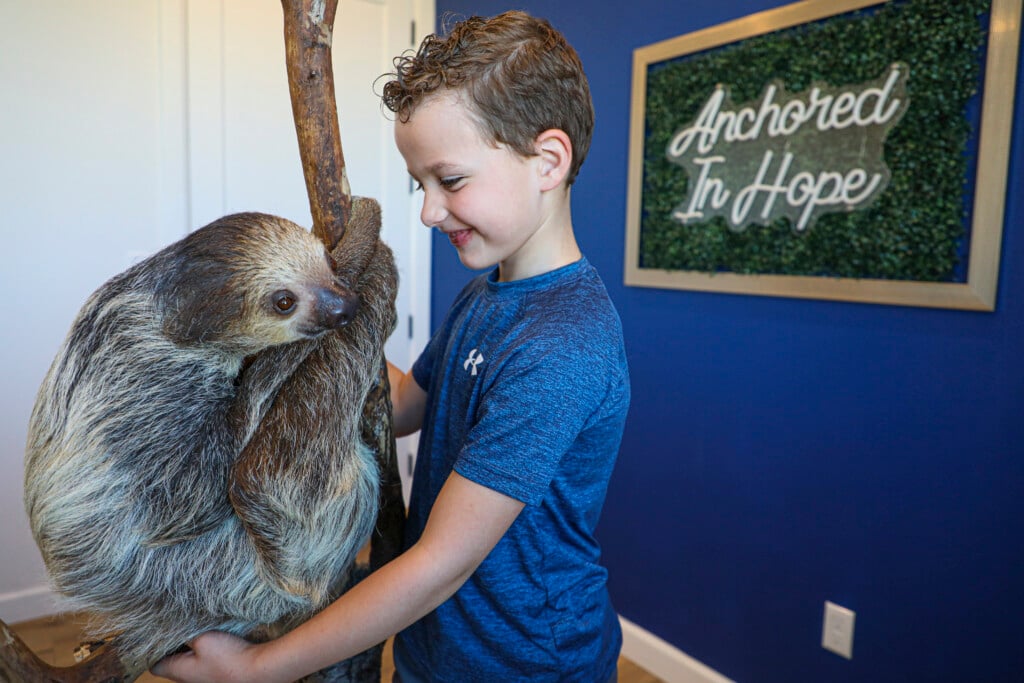
Most people have only encountered sloths on nature shows or behind glass at a zoo. Seeing one a few feet away — reaching slowly for a piece of sweet potato with long curved claws — creates a completely different experience.
There’s a kind of delight that spreads through the room. The kind that makes people smile without realizing it.

Jamison Beers 12, pets Simon the sloth.
A Different Kind of Therapy
For some clients, that moment of fascination becomes a bridge into conversation. While feeding or gently touching the animals, kids and adults sometimes begin sharing things they haven’t felt ready to say before.
One client who had struggled to open up in sessions began talking while interacting with Simon, Beers said — sharing feelings of anxiety and pressure to meet expectations that hadn’t surfaced previously in therapy.
“They meet you where you’re at,” she said during an interview at the practice.
Beers said the work has also helped her reflect more deeply on what the animals seem to bring to the space.
“Everything about them is intentional. Their connection is intentional. Their love is intentional,” Beers said. “When you care for them, you cannot rush. You must slow your breathing. Soften your hands. Regulate your energy. You have to choose presence. And in doing so, something within you begins to settle.”
That idea runs through what happens at Anchored in Hope.
Meet Shiloh and Simon
The two sloths bring very different personalities to the practice. Shiloh, estimated to be around eight years old, is quieter and more reserved. Simon, who will turn three in May, is curious and social, known to wander the clinic stairs and investigate anything within reach.
Shiloh’s story adds another layer to the work.
She was previously kept in a dog crate before being rescued, Beers said. Now, she often helps clients who are navigating their own trauma or anxiety.
“Shiloh’s kind of come full circle,” she said. “She’s overcoming trauma to help others overcome trauma.”
Beyond Therapy
The practice also offers limited sloth encounters to the public, with proceeds supporting Enduring Hope, Beers’ nonprofit, which helps families access therapy and other support services when cost is a barrier.
Those encounters help fund therapy scholarships and community support programs for families who might otherwise struggle to afford mental health services.
For Beers, the goal is simple.
She hopes people who meet Shiloh and Simon leave with the same feeling many clients experience in the therapy room: a reminder that slowing down can change how we connect with ourselves and with each other.

Shiloh the sloth hangs out in one of the rooms at Anchored in Hope.
Sloths, Demystified: Things You Might Not Know
Sloths look simple and sleepy, but these animals have some surprising habits.
They only go to the bathroom about once a week.
Unlike most animals, sloths usually climb down from their trees about once every seven days to pee and poop in the same spot.
Their long claws aren’t just for show.
A sloth’s curved claws are actually extensions of bone covered in keratin (the same material as human fingernails). They use them like hooks to hang from branches.
They’re stronger than they look.
Even though they move slowly, sloths have strong muscles that help them hang upside down for hours at a time.
They like warm weather — a lot of it.
Sloths need warm, humid environments. In captivity, their rooms often stay around 80 degrees with added humidity.
They aren’t big on cuddling.
Sloths prefer hanging rather than sitting or being held, which surprises many people who expect them to act like stuffed animals.
They can live a long time.
In captivity, sloths can live 30–40 years.
Meet the Sloths
You don’t have to be a therapy client to meet Shiloh and Simon.
Anchored in Hope occasionally offers small-group sloth encounters where visitors can learn about the animals, ask questions and interact with them under staff supervision. Guests may have the chance to feed the sloths their favorite snack — sweet potatoes — and take photos.
Space is limited to keep the experience calm for the animals.
Proceeds from the encounters support Enduring Hope, which helps families access mental health services through therapy scholarships and community programs.
Learn about upcoming encounters at anchoredinhopetherapy.com/events.