The Gift Kids Need Most
Why time—not things—makes the biggest difference in a child’s life

All we want for our children is for them to grow up happy, healthy, confident and productive. We want them to feel secure in who they are, make good decisions, form healthy relationships and handle life’s challenges with resilience.
So how do we help create that outcome?
Time.
It is one of the most powerful investments you can make in your child’s future. Unlike toys that break, clothes that are quickly outgrown or gadgets that soon become outdated, time builds something lasting: connection, character and confidence.
Why Time Matters So Much
When we spend intentional time together as a family, our children are constantly learning. They learn:
- Rules and boundaries
- Acceptable behaviors
- Emotional regulation
- Positive communication
- Healthy habits
- Work ethic
- Problem-solving skills
- Empathy and respect
We model, we talk, we teach—and then we repeat.
Children learn far more from what we do than from what we say.
Even when we are not directly “teaching,” our children are learning. They watch how we handle stress. They notice how we treat others, like a server at a restaurant. They hear how we speak about coworkers, neighbors and family members. They observe whether we keep our promises.
Time together allows them to absorb these lessons naturally.
The Temptation of Things
It is easy—especially in a fast-paced world—to substitute things for time.
We are busy or tired. Sometimes we feel guilty. Buying something can feel like we are giving our child joy. And sometimes we are.
But things cannot replace connection.
When we rely too heavily on toys, electronics or material rewards to keep children occupied, we miss opportunities to teach patience, creativity, social skills and emotional awareness. Children may be entertained—but not necessarily connected.
Before purchasing the newest toy or device, pause and ask yourself:
- Do I know my child’s favorite song, singer or musical group?
- What embarrasses them the most right now?
- What is something they are worried about?
- What makes them feel proud?
- What is their favorite way to spend free time?
If we cannot answer these questions, it may be a sign we need more connection—not more purchases.
Quality Matters—But Quantity Counts, Too
Quality time does not have to be complicated or expensive.
Quality time is:
- Eye contact
- Active listening
- Shared laughter
- Undivided attention
- Being fully present (even briefly)
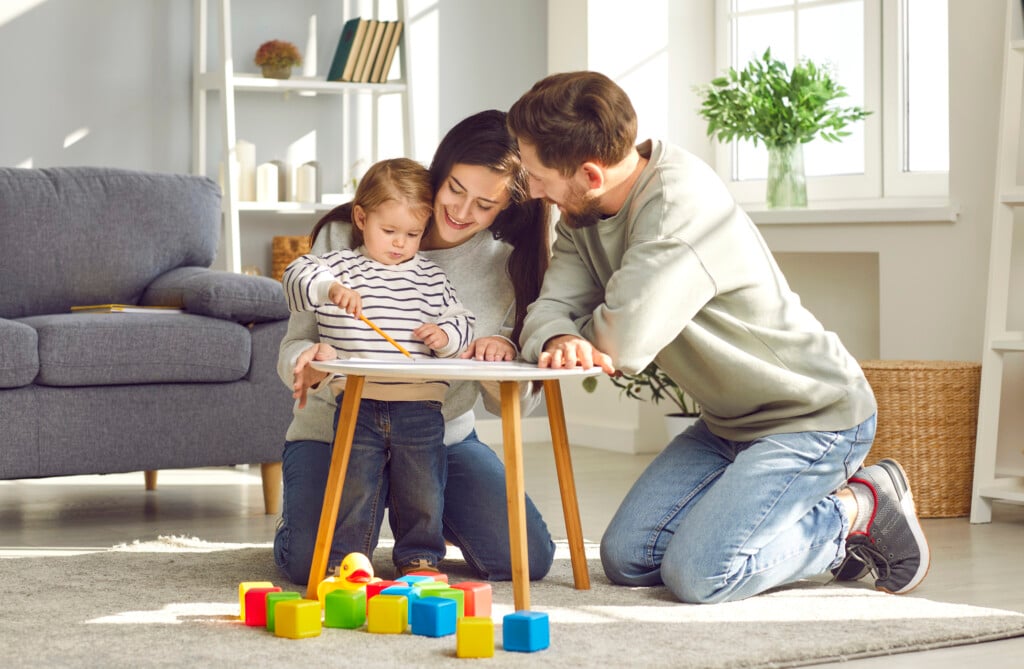
Even 15 minutes of meaningful, focused interaction each day can strengthen your relationship with your child.
Turn off the television. Put the phone down. Sit on the floor and engage.
Small moments add up.
Everyday Moments Are Teaching Moments
During Games
Games and shared activities are an investment in your child’s development. Playing games teaches:
- Turn-taking
- Patience
- Following directions
- Accepting losing gracefully
These are life skills—not just game skills.
During Meals
Mealtime is one of the simplest and most powerful connection tools available.
Instead of closed-ended questions like “Did you have a good day?” ask open-ended questions like:
- “What made you happy today?”
- “Who did you play with?”
- “What made you laugh?”
Closed-ended questions often end conversations quickly. Open-ended questions invite storytelling, reflection and emotional expression.
These discussions also allow you to:
- Talk about healthy peer interactions
- Address difficulties before they grow
- Reinforce values
- Praise effort and persistence
- Normalize mistakes and growth
Children who feel heard are more likely to talk to you when bigger challenges arise.
Simple, Meaningful Activities
Connection does not require money. It requires intention.
Here are simple ways to build connection:
- Have a picnic (at the park, in your backyard or on the living room floor)
- Make a snack together and talk about the taste, texture and ingredients
- Draw or create art side by side
- Play “Simon says”
- Take a walk and talk about what you see
The 15-Minute Challenge
If your schedule feels overwhelming, start small.
Commit to 15 uninterrupted minutes a day with your child.
No phone.
No multitasking.
No distractions.
Let them choose the activity. Follow their lead. Listen more than you talk.
You may be surprised at how powerful that short window can be.
What Matters Most
Children will not remember every toy they received. But they will remember who showed up, who listened, who laughed with them, who comforted them and who made them feel valued.
Time helps us understand our children better, guiding their future, modeling healthy behavior and building lasting connection—because connection, not things, is what truly shapes a child’s life.
Enjoy the moments. They matter more than anything you can buy.
 Angela Percival-Porter is a child development specialist for the State of Oklahoma. She is an adjunct professor, former director of an NAEYC-accredited early learning center, and a consultant to childcare centers.