The Benefits of Unstructured Outdoor Play
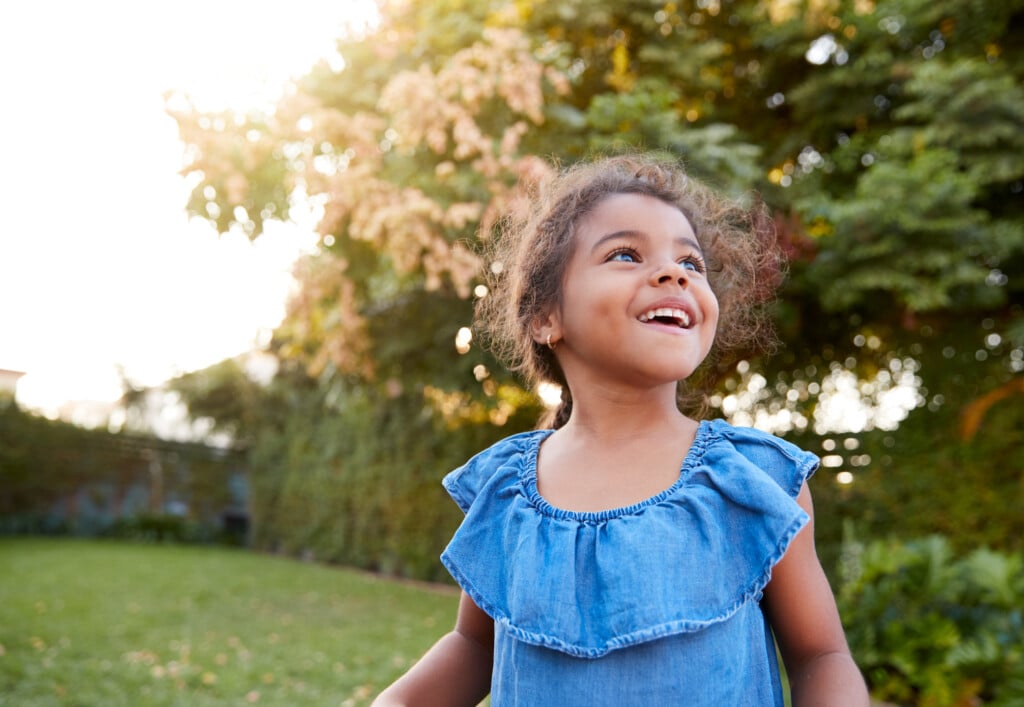
Close your eyes for a moment and think back to your own childhood.
Maybe you remember mud squishing between your toes at the lake. Long, humid Oklahoma summer nights chasing fireflies. Bare feet in the grass. Hours spent making up games with the neighborhood kids. Hot afternoons at the ballfield with nothing but time ahead of you.
For many of us, our favorite childhood memories happened outside—and usually without a schedule.
Today’s kids? Not so much.
Between school, sports, homework and screens, unstructured outdoor play has quietly slipped to the bottom of the priority list. And while we all want to set our kids up for success, experts say that something important is missing.
Occupational therapist Angela Hanscom puts it this way: “Movement through active free play—particularly in the outdoors—is absolutely the most beneficial gift parents, teachers and caregivers can give children.” In other words, letting kids run, climb, dig and explore isn’t just fun—it’s foundational.
What Changed?
The Centers for Disease Control and Prevention reports that only about 23% to 25% of youth meet aerobic physical activity guidelines. At the same time, some studies show children are experiencing neck and back pain at younger ages. Experts note that tightness and restrictions in the neck can contribute to headaches, coordination challenges and even fine motor struggles, including difficulty holding a pencil properly.
It’s not just posture, either. A 2007 study from Sweden found that childhood fractures increased by 13 percent over a 10-year period. Researchers point to changes in children’s activity levels as one possible reason.
Simply put: Kids aren’t moving the way they used to.
How Much Outdoor Play Do Kids Really Need?
The answer might surprise you.
- Infants benefit from daily time outside.
- Toddlers and preschoolers thrive with five to eight hours of active outdoor play.
- School-aged kids still need about four to five hours.
- Teens benefit from three to four hours a day.
That may sound impossible in today’s busy world—but remember, this doesn’t mean organized sports or structured activities. It means free play. Wandering. Digging. Climbing. Imagining.
Why Outside Matters
There’s something about the outdoors that indoor spaces just can’t replicate.
Mud between fingers. Grass under bare feet. The uneven surface of a tree trunk. These experiences build strong sensory systems. Getting messy actually helps children become more comfortable with different textures and sensations.
And yes—being outside (even when kids get a little dirty) supports immune health. Research around the “hygiene hypothesis” suggests that constant sanitizing and ultra-clean environments may not give young immune systems the practice they need.
Kick Off Your Shoes
Then there’s the magic of going barefoot.
Barefoot play helps strengthen arches, improve balance and support natural walking patterns. It increases body awareness and coordination. For little ones just learning to walk, spending time without shoes can even support healthy foot development.
Translation? Those bare feet in the backyard are doing more good than you might think.
Even simple backyard time can be deeply regulating for kids. Uneven ground builds strength. Open-ended play builds creativity. A little risk builds confidence.
And if they fall? They’ll get back up.
The key is intention. In our packed schedules, outdoor play has to be protected time. When we give children the freedom to move, explore and connect with nature, we’re giving them more than fresh air. We’re giving them stronger bodies, calmer nervous systems and space to simply be kids.
Sometimes the best thing we can do for our children is the simplest:
Take off the shoes.
Open the door.
And let them run.
Simple Ways to Bring Back Outdoor Play
You don’t need a big plan. Try these easy ways to encourage more unstructured outdoor time:
- Say yes to puddles.
- Climb trees.
- Stay outside after dark and catch lightning bugs.
- Plant a garden together.
- Pick berries.
- Cook dinner on the grill and eat outside.
 Brandy Browne is an embedded therapist at Tulsa Public Schools and a licensed marriage and family therapist candidate.