Bike Club Gets Kids Rolling
Building confidence and connection one bike at a time
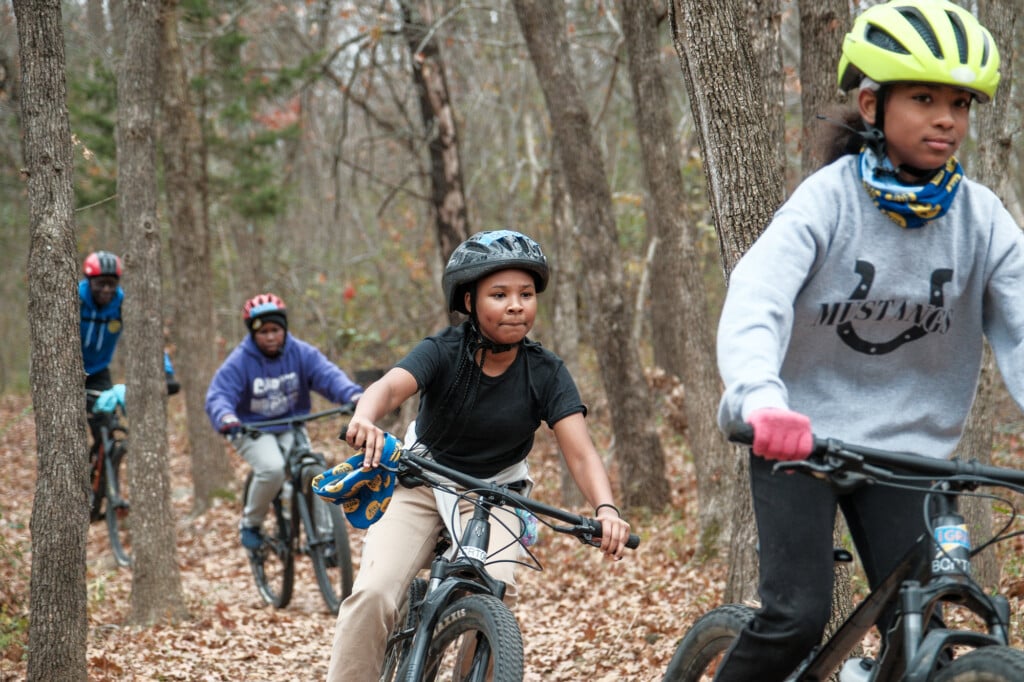
May is National Bike Month, and no organization in Tulsa is doing more to get kids on two wheels than Bike Club. Under the guidance of founders Jason Whorton and Mike Wozniak, the nonprofit operates programs in 37 elementary and middle schools, empowering students with cycling and life skills, while giving away thousands of bikes and helmets in the process.
What Does Bike Club Do?
Bike Club’s after school program runs from September through May. In general, each school’s club is made up of around 20 students, one or two faculty members and several volunteers. Bike Club provides everything needed for the program, including bikes, helmets and curriculum. In the fall, the students and volunteers meet weekly to learn basic bike skills, along with cycling education and safety. In the spring, all of that knowledge is put into practice with off-campus experiences and group rides to places like a fire station, museum or park. Students who successfully complete the program receive their own bike and helmet.
Although these after-school programs are at the heart of what Bike Club does, the organization also fields a race team with former and current Bike Club members who train and compete together in the National Interscholastic Cycling Association (NICA) League. In addition, Bike Club supports Project Bike Tech at Tulsa MET, a course where students learn the mechanical skills of bike service and repair, along with career readiness competencies. Bike Club also offers free bike maintenance and safety checks at community pop-ups in partnership with schools, parks and housing organizations, as well as weekly guided mountain biking rides with specialized equipment for individuals with physical challenges.

Why Bike?
While the digital revolution has brought many benefits, our kids have paid the price for our screen-obsessed world. The costs include everything from increased risk of obesity to loss of social skills and behavioral problems. Although there’s no magic bullet to address the downside of life in the information age, better mental and physical health may be just a bike ride away.
As a form of exercise, regular biking is a joint-friendly method of increasing cardiovascular health. Cycling can burn significant calories, which helps with weight management. It also strengthens lower body muscles and improves core stability. The mental health benefits of exercise, including cycling, are well documented and range from reduced feelings of stress, depression and anxiety to improved focus, confidence and self-esteem.
As Bike Club Program Manager, Jonah Panther sees the positive impact the after-school program has in the students’ lives. There are the obvious improvements in physical health as the kids build the coordination, strength and endurance necessary to ride longer distances. There are subtler changes, too, like increased confidence and pride in their accomplishments.
“One of my favorite things is to get a kid who is really quiet, really reserved, maybe shy and probably lacking in some confidence,” Panther says. “But then you get them on a bike and teach them how to ride better and they start building confidence. They blossom. They start talking to you.”
Bike Club co-founder Mike Wozniak sees bikes as a tool to build relationships.
“When you get moving and your blood starts pumping, that starts to break down some of those barriers that we have,” he says. “Our goal is to create social connections that are meaningful in these youths’ lives, showing students that someone outside of that core group of parents and teachers cares about them in Tulsa.”
Bikes have been an integral part of the lives of Bike Club’s Panther, Whorton and Wozniak for as long as they can remember. While they’re fully aware of the numerous mental and physical health benefits inherent in the sport, they strongly believe teaching kids to bike is also an effective way to build a stronger and better community.
“Your world gets bigger when you get a bike,” says Whorton.

How Biking Helps Community
According to Wozniak, bikes are important for city building and placemaking.
“These kids have never been outside their neighborhood. It expands their bubble,” he says. “When you’re in a car or a bus, it’s a metal aggression box. You get out of that thing, and now your community is at your fingertips. That’s the beautiful thing about a bike. You’re not behind glass and metal. You’re out in your community.”
Whorton believes by teaching kids the rules of the road, Bike Club makes better future motorists, too.
“We feel that respecting order and safety translates into better citizens once they get behind the wheel,” he says. “They’ll be more aware of pedestrians and cyclists.”
In the meantime, Bike Club counts their wins one cyclist at a time.
“Success is measured by how full the bike racks are,” says Whorton. For more, visit bikeclubtulsa.com.